Samurai: Rise of Japan’s Warrior Class
From early provincial warriors to the military elite that shaped feudal Japan.
Introduction
The samurai are among the most recognizable figures in Japanese history: armored riders, sword bearers, clan retainers, officials, rebels, poets, and symbols of discipline. Yet the samurai did not appear suddenly as polished warriors bound by a single code. Their rise was gradual, shaped by land disputes, frontier warfare, court politics, private estates, and the weakening reach of central authority.
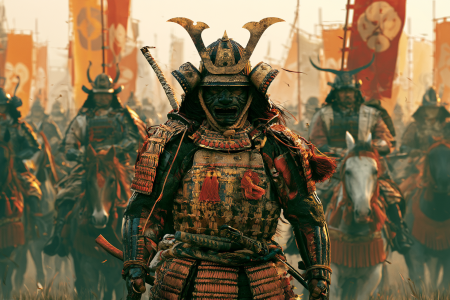
The story of the Samurai: Rise of Japan’s Warrior Class begins before the famous shoguns and castle towns of later centuries. In the Heian period, Japan’s imperial court in Heian-kyō produced refined poetry, ceremony, painting, and literature. At the same time, provincial families far from the capital were building military power. These warriors protected estates, enforced claims, guarded officials, and fought private conflicts. Over time, they became more than armed servants. They became a ruling class. By the late 12th century, the rise of the samurai had changed Japan’s political future.
Imperial Japan Before the Samurai
Early Japan was not ruled by samurai. Power was centered on the emperor, aristocratic families, court ministries, Buddhist institutions, and provincial offices. During the Nara period and early Heian period, the government tried to organize land, taxes, and military obligations through systems inspired in part by Chinese models. The court valued rank, ritual, poetry, and refined culture. In the capital, status often depended on birth, office, and closeness to powerful aristocratic families.
But Japan was difficult to rule from the center. Mountain ranges, local rivalries, tax problems, and private landholding weakened direct control. As aristocrats, temples, and shrines gained estates known as shōen, many of these lands became harder for the central government to tax or police. Estate managers needed protection. Provincial governors needed armed support. Local families learned that military skill could bring status.
This was the environment in which the early samurai began to rise. They were not yet the romantic sword masters of later legend. Many were mounted archers, estate guards, tax enforcers, and local strongmen. Their power grew because the court increasingly depended on warriors to solve problems that court ceremony could not.
Samurai Origins: From Servants to Warriors
The word samurai is related to service. Early samurai served lords, estates, court nobles, or military households. Another important term is bushi, often translated as warrior. These labels did not always mean exactly the same thing in every period, but together they point to a new social reality: professional fighting men were becoming central to Japanese politics.
The early samurai were shaped by local conditions. In eastern Japan, where distance from the capital made direct control weaker, warrior families gained influence through land, horses, kin networks, and private military followings. They developed skills in mounted archery, sword use, armor, and tactical movement. Their world was not simply a battlefield. It was a society of service, loyalty, reward, reputation, and family honor.
These warriors also became tied to aristocratic names. Branches of the imperial family and court nobility moved into military roles, creating powerful clans with prestigious lineages. Among the most important were the Minamoto and Taira. Their rivalry would eventually decide who controlled Japan.
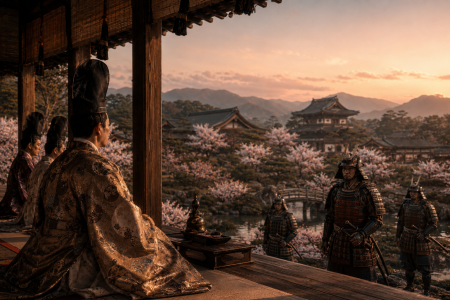
Heian Period Samurai and the Rise of Warrior Power
The Heian period is often remembered for court elegance. Works like The Tale of Genji reflect an aristocratic world of beauty, rank, and emotional refinement. Yet beyond the polished halls of the capital, armed conflict was becoming more important. Land disputes, inheritance struggles, and local rebellions forced the court to rely on military families.
This dependence gave warriors opportunity. A noble family in the capital might need fighters to defend an estate. A provincial official might need local troops to collect taxes. A court faction might call on armed allies during a succession crisis. As warriors served these needs, they gained office, rewards, land rights, and political confidence.
By the late Heian period, the samurai warrior class was no longer only a provincial tool. Warrior leaders entered high politics. They settled court disputes by force. They influenced imperial succession. They married into elite families and became unavoidable in national affairs. Japan was moving toward a new balance of power, where aristocratic culture still mattered, but military strength could decide the future.
| Group / Institution | Role in Early Japan | Connection to Samurai Rise | Historical Importance |
|---|---|---|---|
| Imperial Court | Symbolic and administrative center of government. | Relied on warriors to handle provincial conflict and court disputes. | Remained culturally powerful even as military rule expanded. |
| Aristocratic Families | Held rank, offices, and influence near the capital. | Used warrior clients to protect estates and political interests. | Helped create the social world in which samurai service became valuable. |
| Provincial Warriors | Protected land, enforced claims, and fought local conflicts. | Became the foundation of the samurai warrior class. | Shifted power away from court ceremony toward military service. |
| Minamoto and Taira | Powerful military clans with elite lineage. | Turned warrior rivalry into national civil war. | Their conflict opened the way to the Kamakura shogunate. |
Minamoto and Taira: Samurai Clans in Conflict
The Minamoto and Taira clans became the great rivals of late Heian Japan. Both had connections to the imperial line. Both built military reputations. Both served court factions. Their rise shows how samurai history cannot be separated from politics. Warriors did not merely fight in the provinces; they became instruments of court power and eventually competitors for power themselves.
The conflicts of 1156 and 1160 revealed this new reality. Armed force now decided disputes that earlier generations might have handled through court intrigue alone. The Taira rose to high influence under Taira no Kiyomori, who placed his family near the center of government. For a time, the Taira seemed to dominate Japan. But their power created enemies, especially among the Minamoto.
In 1180 CE, conflict erupted into the Genpei War. This struggle between the Taira and Minamoto was not just a clan feud. It was a turning point in the rise of the samurai. Battles, alliances, betrayals, and shifting loyalties pulled Japan into a conflict that ended at Dan-no-ura in 1185 CE, where the Taira were defeated and Minamoto power emerged supreme.
Minamoto no Yoritomo and the Kamakura Shogunate
After the Genpei War, Minamoto no Yoritomo did not simply move into the imperial court and become another aristocrat. Instead, he built a military government at Kamakura, far from the old capital. This decision mattered. Kamakura became the center of a new political order based on warrior networks, land rights, loyalty, and military service.
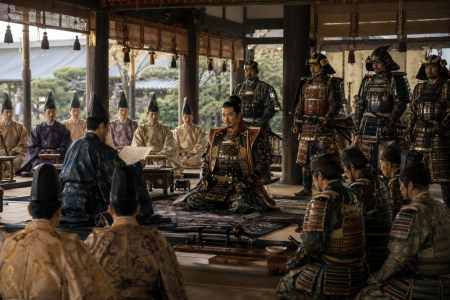
In 1192 CE, Yoritomo received the title seii taishōgun, often shortened to shogun. The emperor and court remained important, but real political power increasingly rested with warrior institutions. The relationship between shogun and samurai depended on service and reward. Vassals gave loyalty and military support. In return, they expected protection, recognition, and rights to land.
This was the beginning of long-lasting warrior rule. Later shogunates would change the structure of government, and the samurai themselves would evolve from mounted archers into administrators, castle warriors, sword-bearing retainers, and eventually hereditary status elites. But the Kamakura order marked the breakthrough: samurai power had become national power.
Samurai Weapons, Armor, and Battlefield Identity
Popular culture often imagines the samurai mainly as swordsmen. The sword was important, and in later centuries it became one of the strongest symbols of samurai identity. But early samurai warfare was also built around the horse and bow. Mounted archery demanded discipline, training, physical strength, and expensive equipment. It also marked the samurai as a distinct military elite.
Armor helped create that identity. High-ranking warriors wore elaborate protective gear designed for mobility, status, and battlefield display. Early armor such as ō-yoroi protected mounted warriors while also showing rank through color, lacing, and craftsmanship. A samurai was not only protected by armor; he was visually announced by it.
Over time, weapons and armor changed with tactics. The bow, sword, spear, and later firearms all played roles in Japanese military history. Like the European knight, the samurai became both a real fighting figure and a cultural symbol. For a comparison with changing warfare in Europe, see our article on Knights to Cannons: The Gunpowder Revolution.
Bushido, Loyalty, and the Samurai Code
Bushido is often described as the samurai code, but it should be handled carefully. The early samurai did not all follow a single written code that looked exactly like the later ideal. Samurai values developed over time, shaped by Buddhism, Confucian thought, clan loyalty, family reputation, military discipline, and the demands of service.
Loyalty was central, but it was not always simple. Samurai served lords, but they also defended family interests, land claims, and personal honor. Some changed sides. Some rebelled. Some became famous for sacrifice, while others became famous for ambition. The gap between ideal and reality is one of the most interesting parts of samurai history.
In later periods, especially during the long peace of the Tokugawa era, bushido became more formalized and moralized. Samurai were no longer only battlefield fighters. Many became officials, scholars, teachers, and administrators. The warrior class survived by redefining itself.
Samurai Japan in the Medieval World
The rise of the samurai belongs to the wider story of medieval military elites. Across different societies, rulers often depended on armed service, landholding, personal loyalty, and warrior identity. In Europe, mounted nobles and kings shaped medieval politics. In Japan, the samurai grew from local service into national authority.
The comparison should not be pushed too far. Samurai were not simply Japanese knights, and Japan developed through its own institutions, beliefs, clan structures, and court traditions. Still, the parallel helps explain why the samurai fascinate so many readers. They stood at the meeting point of violence and culture, service and ambition, loyalty and power.
For another look at how medieval rulership blended war, faith, reform, and political myth, see our article on Charlemagne: Father of Medieval Europe.
Fast Facts: Samurai
-
The samurai rose gradually:
They began as provincial warriors and armed servants before becoming a ruling military class.
-
Early samurai were often mounted archers:
The sword became iconic later, but horseback archery was central to early samurai warfare.
-
The Heian period shaped their rise:
Court politics, private estates, and local conflict helped make warriors more important.
-
The Minamoto and Taira were decisive:
Their rivalry led to the Genpei War, one of the turning points in Japanese military history.
-
Kamakura changed Japan:
Minamoto no Yoritomo’s military government helped establish samurai-led rule.
-
Bushido evolved over time:
The famous samurai code was not a fixed early rulebook, but a developing set of ideals and practices.
Legend vs. Fact
The samurai of legend are often shown as perfectly loyal swordsmen guided by an unchanging code of honor. This image is powerful, but it is incomplete. Historical samurai were more varied. They were warriors, estate managers, vassals, rebels, officials, poets, monks, and political actors. Some lived by strict ideals. Others acted out of survival, ambition, or clan interest.
The real samurai are more compelling than the myth because they changed with Japan. They emerged from provincial violence, rose through service, built military governments, adapted to peace, and left behind a legacy that still shapes global images of Japan. Their story is not only about swords and armor. It is about how a warrior class became a political and cultural force.
Conclusion: How the Samurai Shaped Feudal Japan
The rise of the samurai transformed Japan from a court-centered society into one where warrior authority could dominate national politics. Their origins lay in local service, estate defense, and provincial conflict. Their power grew during the Heian period, exploded through the rivalry of the Minamoto and Taira, and became institutionalized under the Kamakura shogunate.
Samurai history is therefore not a single legend of honor, but a long evolution. The samurai became soldiers, rulers, administrators, symbols, and cultural icons. They shaped feudal Japan through warfare and government, but also through ideas of loyalty, discipline, family prestige, and martial identity. To understand the samurai is to understand how military service became one of the central forces in Japanese history.
Samurai — Frequently Asked Questions
Who were the samurai in Japanese history?
The samurai were Japan’s warrior class. They began as armed servants and provincial military specialists, then became powerful retainers, officials, and ruling elites under the shogunate system.
How did the samurai rise in Japan?
The samurai rose as the imperial court relied more on provincial warriors to defend estates, settle disputes, enforce authority, and fight political conflicts. Their power grew during the Heian period and became national after the Genpei War.
When did the samurai first appear?
Early samurai and bushi emerged around the 10th century CE, though their roots lay in earlier forms of military service, local landholding, and provincial defense.
What was the Genpei War?
The Genpei War was a major conflict from 1180 to 1185 CE between the Minamoto and Taira clans. The Minamoto victory helped open the way for the Kamakura shogunate and samurai-led rule.
Were samurai the same as knights?
Samurai and European knights were both warrior elites connected to service, loyalty, land, and status. However, they developed in different cultures and political systems, so they should not be treated as identical.
What is bushido?
Bushido is often described as the way of the warrior. It refers to samurai ideals such as loyalty, courage, discipline, and honor, though these ideas evolved over time and were formalized more strongly in later periods.
Sources & References
- Friday, Karl F., Samurai, Warfare and the State in Early Medieval Japan, Routledge, 2004.
- Conlan, Thomas D., State of War: The Violent Order of Fourteenth-Century Japan, University of Michigan Center for Japanese Studies, 2003.
- Turnbull, Stephen, The Samurai: A Military History, Routledge, revised edition.
- Farris, William Wayne, Heavenly Warriors: The Evolution of Japan’s Military, 500–1300, Harvard University Asia Center, 1995.
- Mass, Jeffrey P., Yoritomo and the Founding of the First Bakufu, Stanford University Press, 1999.
- World History Encyclopedia, articles on Samurai, Heian Period, Genpei War, and Kamakura Period.
- Asia for Educators, Columbia University, resources on the Age of the Samurai and Kamakura government.
- The Metropolitan Museum of Art, resources on Japanese arms and armor, especially samurai armor from the late Heian through Muromachi periods.
- Encyclopaedia Britannica, reference entries on samurai, shogun, and medieval Japanese history.