Knights to Cannons: The Gunpowder Revolution
How gunpowder, medieval cannons, and early firearms transformed warfare — without ending the age of knights overnight.
Introduction: What was the Gunpowder Revolution?
The gunpowder revolution was not a single invention or battle. It was a long transformation in warfare that began with gunpowder’s development in China, continued with the spread of cannons and firearms across Eurasia, and accelerated dramatically in Europe during the 14th and 15th centuries. By the end of the medieval period, artillery could batter fortifications that had once resisted conventional siege engines, while hand-held firearms were becoming a recognizable part of infantry warfare.
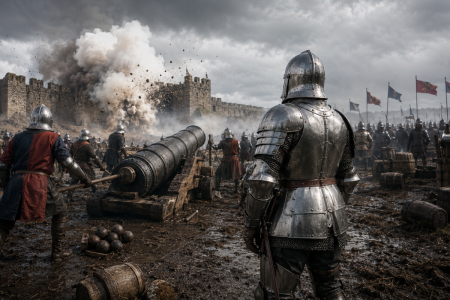
Yet the transition from knights to cannons was not an overnight replacement. Plate-armored cavalry, crossbowmen, longbowmen, pikemen, hand-gunners, bombards, and field artillery often fought in the same armies. A soldier living around 1450 inhabited a battlefield that looked neither fully medieval nor recognizably Napoleonic — it was a hybrid world of steel armor, banners, horses, smoke, primitive firearms, and increasingly powerful cannon.
That transitional world is the real story of the gunpowder military revolution. New weapons changed castles, armies, logistics, taxation, and state power, but they did so over generations. The 15th century was the critical middle stage — when gunpowder stopped being an exotic supplement and became something rulers could no longer afford to ignore.
Gunpowder and Cannons: Quick Answers
| Question | Short answer |
|---|---|
| When was gunpowder invented? | Gunpowder emerged in China during the 9th century, probably from earlier alchemical experimentation. |
| When did gunpowder reach Europe? | Knowledge was present in Western Europe by the mid-13th century; unequivocal European guns appear in the 1320s. |
| Were there cannons in medieval times? | Yes. European armies were using cannons by the early 14th century, more than a century before the end of the Middle Ages. |
| When did cannons become common in Europe? | They spread rapidly during the 14th century, but became especially important and sophisticated during the 15th century. |
| Did guns immediately replace knights? | No. Armored cavalry remained important for centuries while gunpowder weapons were gradually integrated into combined-arms armies. |
| What changed most dramatically first? | Siege warfare. Heavy artillery increasingly threatened high medieval walls and forced engineers to redesign fortifications. |
From China to Europe: Where Gunpowder Came From
Gunpowder originated in China, where alchemists experimented with substances including saltpeter, sulfur, and combustible materials. By the 9th century, Chinese texts were describing mixtures capable of producing intense flames or dangerous explosions. The discovery was not immediately a “gun” technology — early applications included incendiaries, explosive devices, rockets, bombs, and fire lances.
A major milestone came in 1044, when the military treatise Wujing Zongyao recorded several formulas involving saltpeter, sulfur, and charcoal. Over the following centuries, Chinese weapons evolved from flame-projecting devices toward weapons that used expanding gas to propel projectiles from tubes — the technological principle behind the gun.
How Gunpowder Traveled West
The precise route by which gunpowder technology moved from East Asia to the Islamic world and Europe is still debated. The interconnected warfare and trade networks of the Mongol era almost certainly accelerated the movement of military knowledge across Eurasia, but historians caution against imagining a single traveler carrying a finished cannon design from China to Europe.
By the mid-13th century, Western European writers were familiar with substances that appear to describe gunpowder. The English scholar Roger Bacon, for example, discussed an explosive mixture during the 1250s and 1260s, although the exact interpretation of some surviving passages remains debated.
What becomes much clearer in the early 14th century is the arrival of the gun itself. Documents mention artillery in France and Italy during the 1320s, and an English manuscript produced around 1326–1327 contains the earliest surviving European illustration of a cannon — a vase-shaped gun firing a large arrow-like projectile.
How Quickly Did Cannons Spread?
Once guns appeared in Europe, they spread surprisingly quickly. Evidence exists from France, Florence, England, the German lands, Iberia, and elsewhere within decades of the first known examples. By the 1350s, European writers could already describe firearms as something that had recently gone from astonishing novelty to familiar weapon.
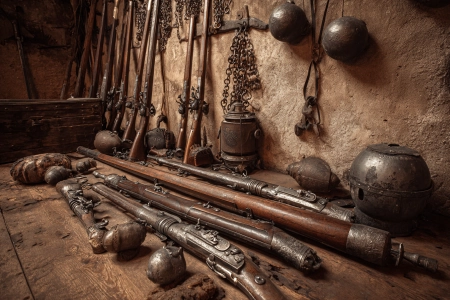
Early guns remained dangerous, expensive, and technically inconsistent. Barrels could burst, gunpowder varied in strength, ammunition was irregular, and recoil was poorly controlled. Nevertheless, rulers, towns, nobles, and military entrepreneurs continued buying them because even imperfect cannon offered capabilities that mechanical artillery could not easily match.
Medieval Cannons: From Experimental Weapons to Siege Artillery
The earliest medieval cannons were often small, awkward weapons firing arrows, lead balls, iron shot, or stone projectiles. Some barrels were cast in bronze; others were constructed from longitudinal wrought-iron bars held together by reinforcing hoops. Designs varied enormously because there was no standardized European cannon industry.
Heavy bombards soon became the most visually spectacular artillery of the late Middle Ages. These enormous siege pieces could fire stone balls weighing tens or even hundreds of kilograms. Their rate of fire was slow, transportation was difficult, and positioning them could require teams of horses, oxen, engineers, carpenters, laborers, wagons, and specialized gunners. But once emplaced, they could repeatedly attack the same section of masonry until cracks became breaches.
By the later 14th century, some European siege guns were already capable of firing extremely heavy stone shot. During the 15th century the important change was therefore not that cannon suddenly appeared, but that their quality, quantity, organization, ammunition, mobility, and powder performance improved.
What Did the Transition from Knights to Cannons Actually Look Like?
The transition period can be difficult to picture because popular imagery tends to jump from medieval knights directly to Renaissance musketeers or later Napoleonic armies. The 15th-century battlefield looked very different from either extreme.
- Knights and men-at-arms still rode horses and fought in increasingly sophisticated full plate armor.
- Pikemen formed dense infantry blocks capable of resisting cavalry.
- Longbowmen and crossbowmen remained major missile troops.
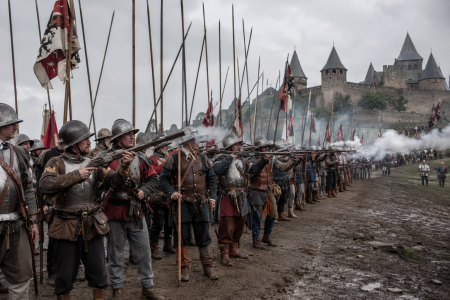
- Hand-gunners carried simple firearms that could be difficult to aim but lethal at close range.
- Bombards and siege cannon traveled slowly with armies and attacked walls, gates, and fortified positions.
- Smaller field artillery increasingly appeared on wheeled carriages and could accompany armies more effectively.
- Swords, polearms, lances, axes, bows, and guns all remained in use at the same time.
A campaign in the 1450s could therefore contain armored nobles who would look perfectly at home in a medieval tournament standing only a short distance from professional gunners handling chemical propellant and cast-metal artillery. This technological overlap, rather than a sudden disappearance of medieval warfare, defines the gunpowder Renaissance.
Early Gunpowder Weapons of the 14th and 15th Centuries
| Weapon | Period | Typical role | What made it important |
|---|---|---|---|
| Bombard | 14th–15th centuries | Heavy siege artillery | Fired large stone balls against walls, gates, and towers. |
| Hand-gonne | 14th–15th centuries | Early infantry firearm | A simple barrel on a stock or tiller, fired manually through a touch-hole. |
| Ribauldequin / organ gun | 14th–15th centuries | Short-range multi-barrel weapon | Allowed several small barrels to discharge in rapid succession or together. |
| Field cannon | 15th century onward | Mobile battlefield artillery | Smaller guns and improved carriages made artillery easier to move with armies. |
| Culverin | 15th–16th centuries | Longer-range cannon | Longer barrels and smaller projectiles favored greater velocity and versatility. |
| Matchlock arquebus | Late 15th century onward | Infantry firearm | A mechanical lock made ignition easier than manually applying a burning match. |
| Mortar | Late medieval / early modern | High-angle siege fire | Could throw projectiles over walls into defended areas. |
Better Powder, Better Guns: Why the 15th Century Mattered
Early European gunpowder was not chemically identical from workshop to workshop. Ratios of saltpeter, charcoal, and sulfur varied, ingredients could contain impurities, and finely mixed powder could separate during transportation. Improving the powder itself was therefore as important as improving the cannon.
During the early 15th century, European powder-makers increasingly adopted corning or granulation. Dampened powder was formed into larger grains and then dried. The grains were easier to handle, less likely to separate into their component ingredients, and could burn more efficiently than loose fine powder. An early European reference to corning survives from Germany in 1411.
Meanwhile, gun founders refined wrought-iron and bronze construction, artillery crews became more specialized, and rulers established arsenals capable of storing powder, shot, tools, spare parts, and guns. The result was a weapon system rather than merely a weapon.
What Did an Artillery Train Need?
- Gunpowder: saltpeter, charcoal, sulfur, storage barrels, and powder-makers.
- Ammunition: stone or metal shot sized for particular weapons.
- Specialists: founders, master gunners, carpenters, blacksmiths, engineers, and laborers.
- Transport: horses, oxen, wagons, reinforced roads, bridges, and sometimes ships.
- Tools: rammers, ladles, ropes, wedges, lifting gear, spades, and repair equipment.
- Food and fodder: artillery crews and transport animals could not operate without a substantial supply network.
This logistical burden explains why artillery increasingly favored wealthy rulers and large cities. A knight could own a sword and armor personally; a giant bombard required an organization.
Renaissance Cannons and the 15th-Century Artillery Revolution
By the middle of the 15th century, artillery had become one of the defining tools of major European and Ottoman warfare. Historians sometimes describe this period as an artillery revolution because cannon were now capable of changing the outcome and duration of sieges on a scale that earlier guns usually could not.
France developed increasingly well-organized royal artillery during the closing phase of the Hundred Years’ War. Cannons played a major part in reducing English-held fortifications, while battlefield artillery was also prominent at the Battle of Castillon in 1453. The French victory there helped end the main phase of the war.
This was the same military world in which Joan of Arc had campaigned only two decades earlier. During her lifetime, gunpowder artillery was already present, but by the 1450s its organization and tactical importance had grown substantially.
Burgundy, the Italian states, England, Scotland, the Holy Roman Empire, Spain, Hungary, and the Ottoman Empire likewise invested heavily in artillery. Large cannon became instruments not only of military force but also of princely prestige. A ruler possessing an impressive artillery train advertised wealth, metallurgy, expertise, and centralized power.
Constantinople 1453: The Most Famous Medieval Cannon Siege
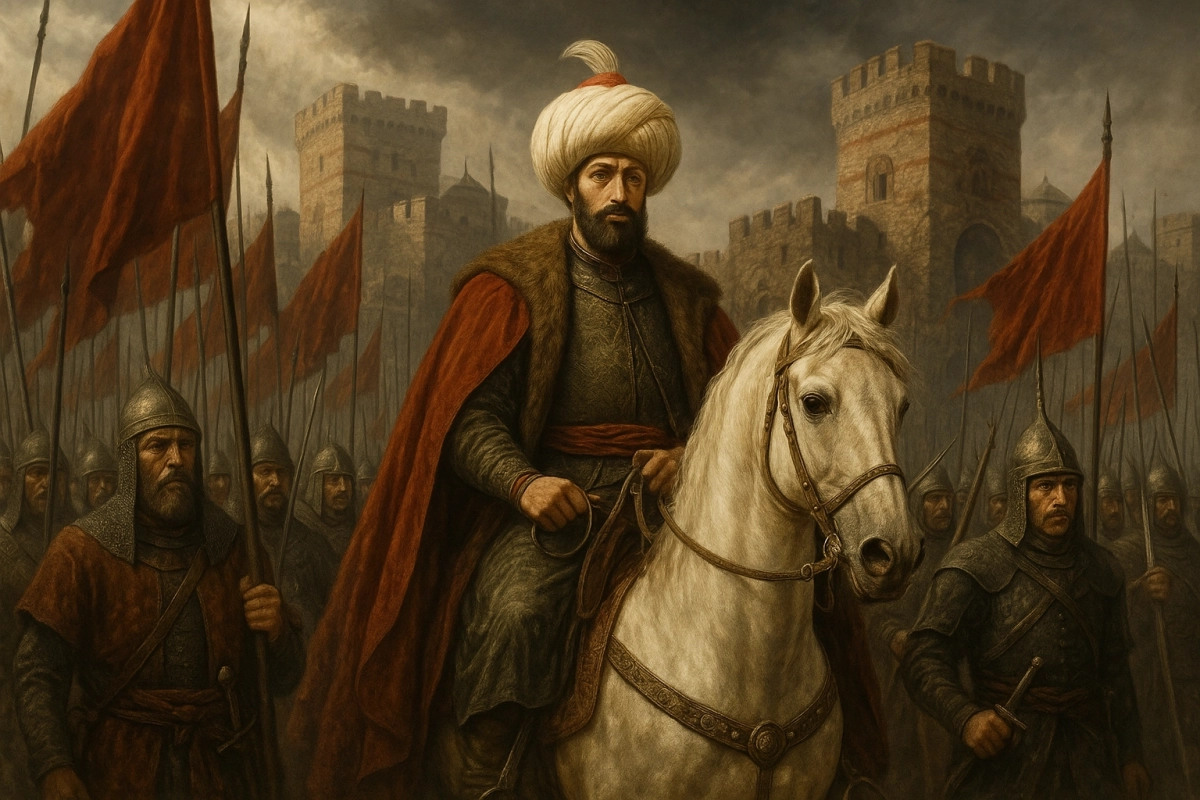
No 15th-century siege is more closely associated with gunpowder than the Fall of Constantinople in 1453. Sultan Mehmed II assembled a large Ottoman force, fleet, engineers, miners, siege equipment, and an artillery train to attack the Byzantine capital.
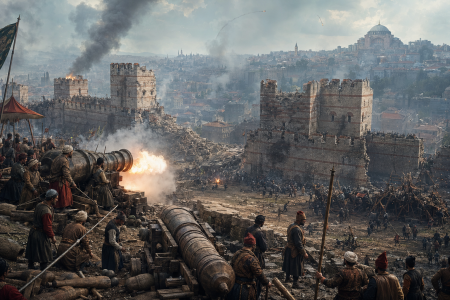
Among the Ottoman guns were enormous stone-throwing bombards associated with a founder often called Urban or Orban in later accounts. Their size has dominated popular memory, but the siege was not won by one super-cannon. Ottoman forces used artillery of different calibers, repeated assaults, mining operations, naval pressure, blockade, logistics, and overwhelming manpower during a siege lasting from 6 April to 29 May 1453.
The bombardment damaged and repeatedly weakened the famous Theodosian Walls, while Byzantine defenders repaired breaches with earth, timber, rubble, and temporary barriers. The battle therefore demonstrates both sides of the gunpowder transition: cannon had become powerful enough to threaten ancient masonry, but walls did not simply disintegrate after the first shot.
Constantinople’s fall became a symbol of the new age because it showed that even one of the world’s most celebrated fortified cities could be subjected to sustained artillery attack. Yet other contemporary sieges also showed that good fortifications could still resist cannon. The Ottoman failure at Belgrade in 1456, for example, demonstrated that artillery had not made defense obsolete.
How Castle Walls Changed to Survive Gunpowder
Traditional medieval fortifications favored high stone walls and tall towers. Height complicated ladder assaults and gave defenders commanding fields of fire, but high masonry presented artillery with a large brittle target. Repeated cannon impacts could fracture stone, loosen facing blocks, and create breaches suitable for assault.
The response was adaptation, not the instant disappearance of castles. During the later 15th century, engineers increasingly lowered walls, strengthened them with earth, widened defensive works, modified towers, and created positions from which defensive cannon could fire back.
| Older medieval feature | Gunpowder-era adaptation | Reason |
|---|---|---|
| Tall exposed curtain walls | Lower, thicker walls backed by earth | Absorbed cannon impact more effectively. |
| High square or round towers | Lower artillery towers and later angular bastions | Reduced vulnerable vertical surfaces and improved defensive fire. |
| Simple wall perimeter | Ditches, outerworks, earth banks, and multiple defensive zones | Kept attacking guns farther from the main defenses. |
| Primarily vertical defense | Flanking fire along walls and ditches | Allowed defenders to shoot attackers approaching breaches. |
| Castle centered on a noble residence | Large fortified urban systems and artillery forts | Gunpowder defense increasingly required extensive engineering and funding. |
In Italy, experimentation ultimately produced the angular bastioned fortress often called the trace italienne. Its mature star-fort form belongs mainly to the 16th century, but its origins lie in the late-15th-century struggle between improving artillery and engineers trying to build walls that could survive it.
This arms race changed the appearance of European cities. Medieval skylines dominated by exposed vertical walls increasingly gave way to sprawling systems of ramparts, bastions, ditches, and earthworks.
Did Gunpowder End the Age of Knights?
Gunpowder contributed to the decline of the traditional knightly military system, but firearms did not suddenly make plate armor or cavalry useless. In fact, some of the finest and most complete suits of European plate armor were produced after firearms had already become common.
Armorers responded to increasingly dangerous missile weapons by improving plate construction, shaping surfaces to deflect projectiles, and strengthening vulnerable areas. Some later breastplates were even tested against firearms, leaving a controlled dent that could serve as evidence that the armor had been “proved.”
The real problem was economic and tactical. Heavy armor capable of resisting powerful shot was expensive and burdensome. Meanwhile, states could equip growing numbers of infantry with pikes, crossbows, and increasingly effective firearms. A highly trained armored warrior remained deadly, but he no longer held the same monopoly over battlefield power.
Pikes, Handguns, and Combined Arms
By the late 15th and 16th centuries, infantry formations increasingly combined pikes and firearms. Pikemen protected formations against cavalry while arquebusiers or other gunmen delivered missile fire. Cavalry did not disappear; instead, commanders integrated horsemen, artillery, firearm infantry, and pikemen into increasingly sophisticated combined-arms systems.
Warriors such as Vlad the Impaler therefore belonged to a transitional age. Cavalry raids, ambushes, fortified towns, bows, swords, cannon, and firearms could all matter in the same conflict.
Smoke, Noise, and Fear: What Gunpowder Warfare Felt Like
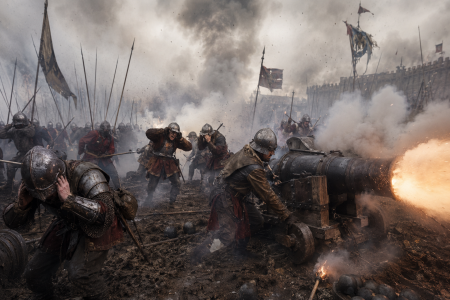
Gunpowder changed more than military organization. It transformed the sensory experience of war. Cannons produced concussive blasts unlike the sound of bows, swords, or mechanical siege engines. Handguns added sharp reports, while repeated firing filled confined siege lines and battlefields with smoke.
Early black powder produced thick clouds that could obscure targets and complicate command. Artillery crews worked close to exposed flame, loose powder, heavy projectiles, and barrels that could rupture without warning. Misfires were common enough to require specialized procedures for clearing weapons safely.
Civilians faced new dangers as well. A cannonball did not need to strike a person directly to kill. Stone fragments, collapsing masonry, roof timbers, and debris could turn bombardment into a deadly shower inside defended towns. Artillery also exerted psychological pressure: defenders knew that a breach might trigger a general assault and sack.
Who Was Affected by the Gunpowder Revolution?
Gunpowder warfare altered the position of almost every group involved in medieval conflict.
- Knights and nobles: remained important but faced rising competition from professional infantry and royal artillery.
- Infantry: gained new battlefield importance as firearms became easier to train soldiers to use effectively in organized formations.
- Artisans: founders, blacksmiths, powder-makers, carpenters, and engineers became strategically valuable specialists.
- Merchants: supplied sulfur, saltpeter, metals, timber, horses, food, and other materials necessary for gunpowder war.
- Rulers: gained powerful tools against fortified rivals but had to build larger taxation and administrative systems to finance them.
- Local lords: could find independent castles less secure against rulers who possessed professional artillery trains.
- City governments: faced enormous costs redesigning walls and purchasing their own guns.
- Civilians: increasingly experienced sustained bombardment during sieges, alongside the older dangers of famine, assault, fire, and disease.
Gunpowder, Money, and the Rise of Stronger States
A giant cannon represented concentrated wealth. Metal had to be purchased, founders hired, powder manufactured, ammunition prepared, animals fed, roads cleared, wagons repaired, and crews paid. New artillery-resistant fortifications were even more expensive.
These costs encouraged rulers to develop stronger systems of taxation, administration, arsenals, permanent troops, and military supply. Gunpowder did not single-handedly create the centralized state, but it strengthened the advantage of governments capable of mobilizing resources over long periods.
The connection can be seen clearly in rulers such as Mehmed II, whose achievements depended not simply on possessing cannon, but on coordinating engineers, fleets, infantry, artillery, logistics, diplomacy, and imperial finance.
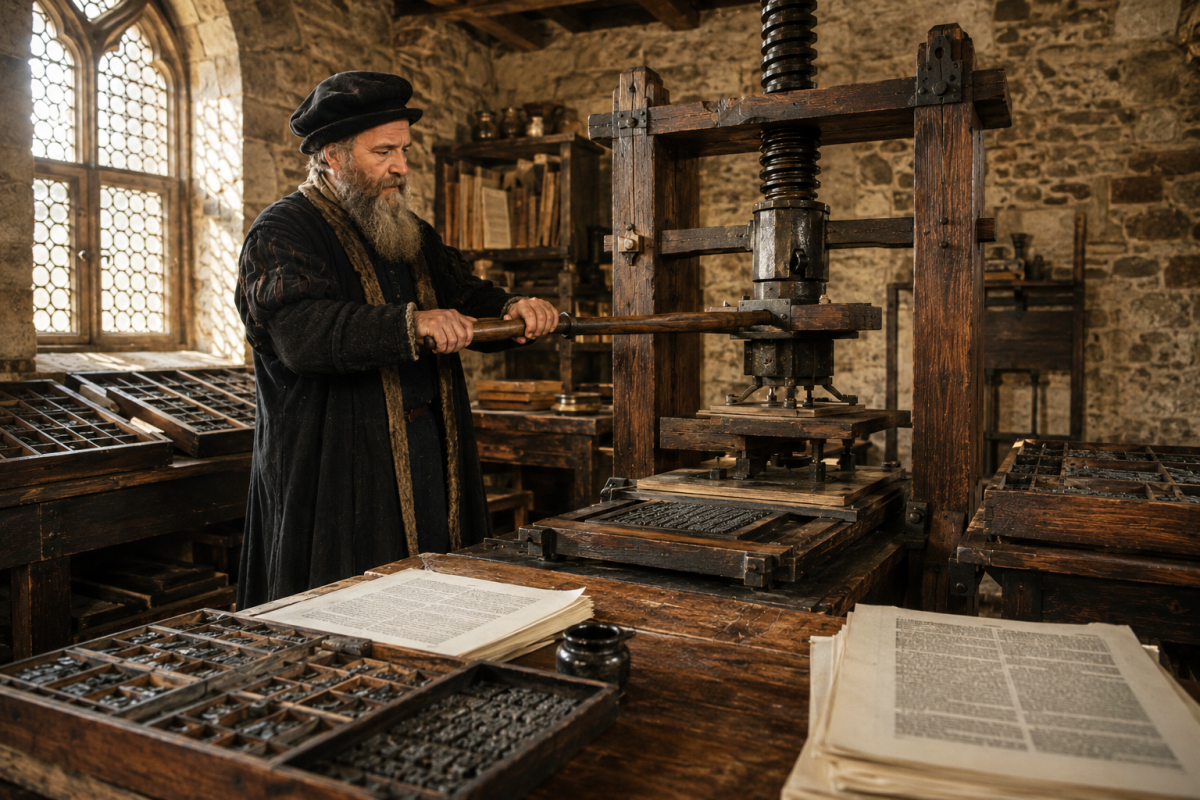
Military technology also intersected with the century’s communications revolution. The printing press later allowed technical treatises, siege illustrations, news of battles, and military ideas to circulate more widely. War was becoming increasingly dependent on both information and specialized technology.
Fast Facts: From Knights to Cannons
-
Chinese origins
Gunpowder emerged in China centuries before firearms became common in Europe.
-
Europe by the 13th century
Western Europeans knew about gunpowder before European cannons appeared.
-
First European guns
Secure documentary and visual evidence appears during the 1320s.
-
Medieval cannons were real
Gunpowder artillery was used throughout the later Middle Ages, not invented during the Renaissance.
-
Sieges changed first
Heavy cannon initially had their greatest impact against walls and fortified towns.
-
Powder improved
15th-century corning and better recipes made gunpowder more reliable and powerful.
-
Knights survived
Armored cavalry remained militarily important long after firearms appeared.
-
Fortresses adapted
Lower, thicker, earth-backed defenses eventually replaced many vulnerable high medieval walls.
-
Constantinople became the symbol
Ottoman artillery in 1453 demonstrated the growing power of organized siege warfare.
-
The revolution took centuries
Gunpowder transformed warfare through cumulative changes in weapons, armies, finance, logistics, and fortification.
This logistical burden explains why artillery increasingly favored wealthy rulers and large cities. A knight could own a sword and armor personally; a giant bombard required an organization.
Was There Really a “Gunpowder Revolution”?
Historians continue to debate whether the term military revolution exaggerates the speed of change. The argument for a revolution points to dramatic developments in artillery, fortification, infantry tactics, army size, naval warfare, and military finance from the late Middle Ages into the early modern period.
The counterargument emphasizes continuity. Cannons had existed for about a century before the mid-15th-century artillery boom. Knights did not vanish. Castles did not instantly become useless. Bows, crossbows, swords, pikes, and cavalry remained central to warfare long after guns appeared. Some regions adopted firearms rapidly; others moved more slowly.
It may therefore be most accurate to think of gunpowder as a revolution produced through evolution. Individual changes were gradual, but their cumulative effect was enormous. By the 16th century, warfare had become deeply dependent on firearms, artillery, specialized fortifications, professional soldiers, and the fiscal machinery required to sustain them.
Leonardo da Vinci and the Gunpowder Imagination
The intellectual culture of the Renaissance also absorbed the new military reality. Engineers and artists designed fortifications, artillery carriages, multi-barrel weapons, and defensive systems for patrons competing in increasingly technical wars.
Leonardo da Vinci famously filled notebooks with designs for fortifications, cannon, multi-barrel guns, armored vehicles, and other military machines. Not all were practical, but they illustrate how completely gunpowder had entered the imagination of late-15th-century engineers.
Conclusion: The Battlefield Between Two Ages
The gunpowder revolution did not erase medieval warfare in a single dramatic moment. It created a long transitional battlefield in which armored cavalry rode beside men carrying firearms, bombards stood beside older siege equipment, and traditional castle walls were repeatedly redesigned rather than simply abandoned.
The 15th century was the decisive bridge. Gunpowder had been known in Europe for generations, but improvements in powder, metallurgy, artillery organization, transport, and state finance made cannon increasingly central to serious warfare. From French artillery during the final phase of the Hundred Years’ War to Mehmed II’s siege of Constantinople, rulers learned that gunpowder was no longer optional.
What followed was an arms race between guns and defenses, cavalry and infantry, local fortresses and increasingly centralized states. The medieval knight did not disappear when the first cannon fired — but the political and military world that had produced him was beginning to change.
Gunpowder Revolution — Frequently Asked Questions
When was gunpowder invented?
Gunpowder developed in China, with evidence pointing to experimentation by the 9th century. The Chinese military text Wujing Zongyao recorded gunpowder formulas in 1044.
When did gunpowder reach Europe?
Knowledge of gunpowder reached Western Europe by approximately the mid-13th century. Secure evidence for European guns appears in the 1320s, including documentary references and illustrations from 1326–1327.
When were cannons invented in Europe?
European cannons are documented in the early 14th century. References appear in France and Italy during the 1320s, and one of the earliest surviving illustrations appears in an English manuscript produced around 1326–1327.
When did cannons become common in Europe?
Cannon spread rapidly after appearing in the early 14th century and were no longer exotic by the middle of that century. Their military importance increased especially during the 15th century, when large artillery trains became central to major sieges.
Were cannons used during the Middle Ages?
Yes. Cannons were a late-medieval technology. European armies had been using gunpowder artillery for more than a century by the time Constantinople fell in 1453.
Were cannons used at the Battle of Crécy in 1346?
Possibly, but the evidence is not strong enough to present the claim as certain. Some historical evidence suggests that small English gunpowder weapons may have been present at Crécy, but their tactical importance would have been minor compared with the longbowmen and conventional forces.
How did gunpowder change medieval warfare?
Its first major effect was on siege warfare. Cannons could repeatedly strike masonry walls from a distance, forcing defenders to redesign fortifications. Firearms later increased the battlefield importance of disciplined infantry, while the cost of artillery encouraged stronger taxation, arsenals, and centralized military administration.
Did firearms immediately replace medieval knights?
No. Knights and other armored cavalry remained important throughout the 15th and 16th centuries. Firearms gradually changed their tactical role while armies increasingly combined cavalry with pikemen, hand-gunners, artillery, and other infantry.
How did fortress design change because of cannon?
Engineers gradually replaced vulnerable high walls with lower, thicker defenses reinforced by earth. Angular bastions, wider ditches, and overlapping fields of fire eventually developed into the trace italienne or star-fort system associated with early modern warfare.
Why were 15th-century cannons difficult to move?
Large bombards could weigh several tons. Moving them required strong wagons, teams of animals, good roads or waterways, laborers, lifting equipment, ammunition, powder, and specialized crews. Transportation could be as difficult as firing the weapon itself.
How long did it take medieval Europeans to make a cannon?
There was no standard production time. Small guns could be made far more quickly than giant bombards, while large wrought-iron or bronze artillery required specialized workshops, substantial quantities of metal, skilled labor, and extensive finishing. Major artillery programs were therefore long-term industrial projects rather than simple blacksmith work.
Why is the period called a gunpowder revolution if change was gradual?
Historians use the term because the cumulative effects were revolutionary even though the process took centuries. Artillery, firearms, fortifications, professional armies, logistics, taxation, and state organization all changed in response to gunpowder warfare. The exact speed and importance of those changes remain subjects of historical debate.
Sources & References
- Tonio Andrade, The Gunpowder Age: China, Military Innovation, and the Rise of the West in World History (Princeton University Press, 2016).
- Bert S. Hall, Weapons and Warfare in Renaissance Europe: Gunpowder, Technology, and Tactics (Johns Hopkins University Press, 1997).
- Kelly DeVries and Robert Douglas Smith, Medieval Military Technology (University of Toronto Press).
- Geoffrey Parker, The Military Revolution: Military Innovation and the Rise of the West, 1500–1800 (Cambridge University Press).
- Axel E. W. Müller, Gunpowder Technology in the Fifteenth Century: A Study, Edition and Translation of the Firework Book (Boydell & Brewer, 2024).
- Clifford J. Rogers and Fabrizio Ansani, “The Earliest European Recipes for ‘Powder for Guns’ (1336 and 1338–c. 1350),” Journal of Medieval Military History.
- Trevor Russell Smith, “The Earliest Middle English Recipes for Gunpowder,” Journal of Medieval Military History, including evidence for early gunpowder corning.
- Gábor Ágoston, Guns for the Sultan: Military Power and the Weapons Industry in the Ottoman Empire (Cambridge University Press, 2005).
- Simon Pepper, “Fortification and Siege Warfare,” in The Cambridge History of War, Vol. III (Cambridge University Press, 2025).
- Royal Armouries, resources on the Hundred Years’ War, medieval artillery, handguns, and surviving late-medieval weapons.
- University of Oxford, Firearms: The Earliest European Image, 1326–27, on the Walter de Milemete manuscript and early European artillery.
- Metropolitan Museum of Art, Arms and Armor collection records for surviving late-14th- and early-15th-century European cannon and ammunition.
More Articles