Vlad the Impaler: The Real History Behind the Dracula Legend
Wallachia’s feared prince became Europe’s Dracula legend — but the real Vlad III was shaped by hostage politics, civil war, and the Ottoman frontier.
Introduction: The Man Behind the Myth
Vlad III Dracula, better known as Vlad the Impaler or Vlad Țepeș, was a 15th-century prince who ruled Wallachia three times during one of southeastern Europe’s most violent political eras. He was not a vampire, nor was he primarily a ruler of Transylvania. He was a Wallachian voivode struggling to survive between the expanding Ottoman Empire, the Kingdom of Hungary, and rival noble factions competing for his throne.
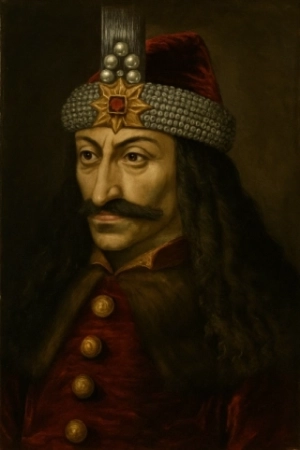
The real history of Vlad the Impaler is disturbing enough without supernatural embellishment. He used impalement, executions, scorched-earth tactics, and carefully staged terror against enemies at home and abroad. Yet the image remembered today was also shaped by hostile German pamphlets, political propaganda, Romanian traditions, and Bram Stoker’s 1897 novel Dracula. This biography examines Vlad’s early life, Ottoman hostage years, contested reigns, the Night Attack at Târgoviște, his uncertain death, and the limited connection between the historical prince and the fictional Count Dracula.
Wallachia Between Hungary and the Ottoman Empire
Vlad’s principality of Wallachia occupied a dangerous frontier north of the Danube. Its rulers faced pressure from two larger powers: the Kingdom of Hungary to the northwest and the expanding Ottoman Empire to the south. Wallachian voivodes might pay tribute to the Ottoman sultan while simultaneously seeking Hungarian military support — a fragile balancing act that encouraged invasion, conspiracy, and repeated changes of ruler.
The Wallachian throne was not inherited automatically by the eldest son. Several branches of the ruling Basarab dynasty could produce candidates, and powerful boyars often backed whichever claimant best protected their interests. Vlad therefore fought not only foreign armies but also rival princes supported by competing noble factions. His harsh centralization of power makes more sense within this unstable political system, although instability does not excuse the extreme punishments attributed to his reign.
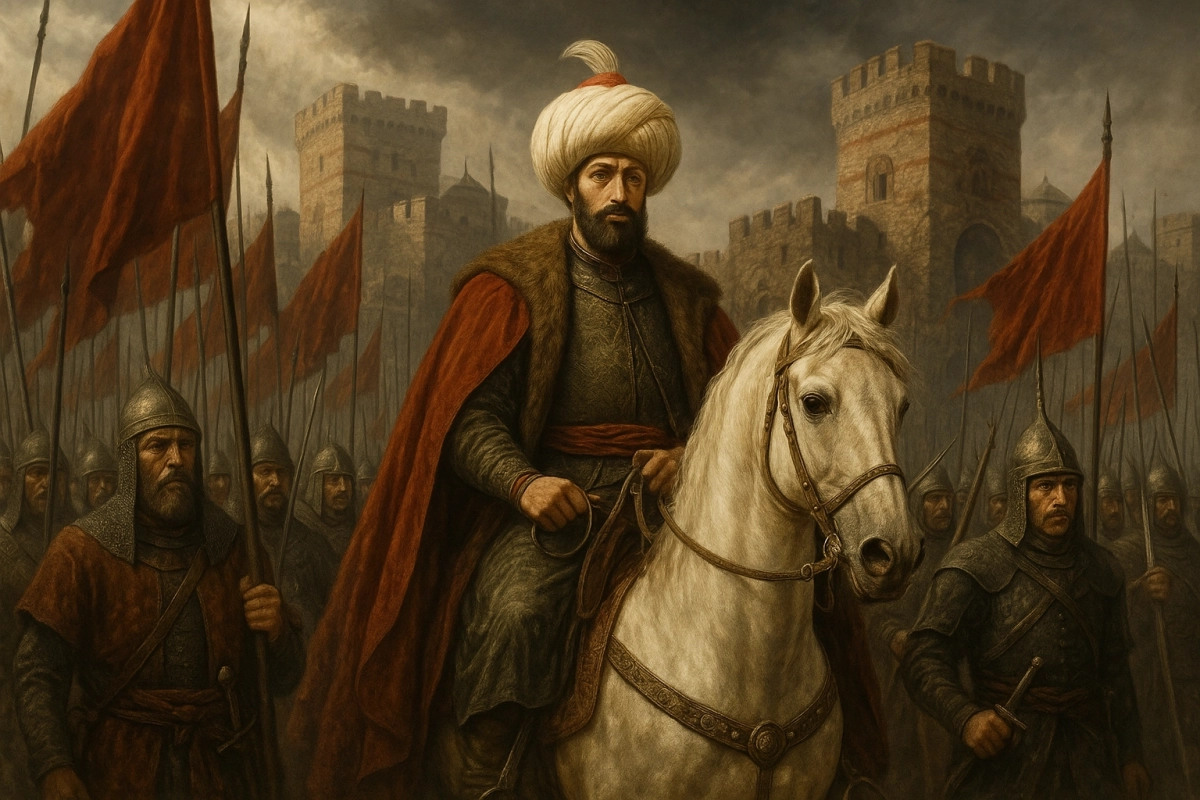
Vlad’s greatest foreign opponent was Mehmed II, the Ottoman sultan who had conquered Constantinople in 1453. Their conflict unfolded during the wider military transformation explored in Knights to Cannons: The Gunpowder Revolution, when artillery, firearms, fortified cities, and mobile frontier armies were changing medieval warfare.
Vlad the Impaler: Biography at a Glance
| Category | Historical detail |
|---|---|
| Full name | Vlad III, also known as Vlad Dracula and Vlad Țepeș |
| Born | Probably between 1428 and 1431; traditionally associated with Sighișoara in Transylvania |
| Father | Vlad II Dracul, voivode of Wallachia and member of the Order of the Dragon |
| Realm | Wallachia, a principality between Hungary and the Ottoman Empire |
| Reigns | 1448; 1456–1462; 1476 |
| Best-known battle | The Night Attack against Mehmed II in June 1462 |
| Died | Late 1476 or early 1477, probably during fighting near Bucharest |
| Historical legacy | Remembered as both a brutal ruler and an opponent of Ottoman expansion |
Vlad the Impaler’s Early Life and Ottoman Hostage Years
Vlad III was a son of Vlad II Dracul, who received the name Dracul after joining the Order of the Dragon, a royal chivalric order associated with the defense of Christian territories. Vlad III’s name, Drăculea or Dracula, originally indicated that he was the son of Dracul — the son of the Dragon. The modern Romanian word drac can also mean devil, a linguistic overlap that later made the name especially attractive to gothic storytellers.
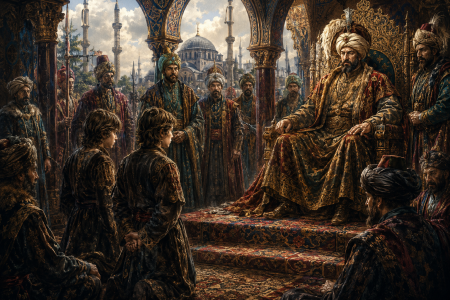
During a political crisis in the early 1440s, Vlad and his younger brother Radu were left in Ottoman custody as guarantees of their father’s loyalty. They were political hostages rather than ordinary prisoners and probably received instruction suited to young noblemen, including languages, court customs, horsemanship, and military practices. Their treatment nevertheless depended on Vlad II’s obedience and therefore carried a constant threat.
The brothers later chose sharply different paths. Radu developed strong connections at the Ottoman court and eventually ruled Wallachia with Ottoman backing. Vlad moved between Ottoman, Moldavian, and Hungarian spheres before becoming one of Sultan Mehmed II’s most defiant frontier opponents. His years among the Ottomans may have given him valuable knowledge of their language, organization, and battlefield methods — knowledge he later used against them.
Three Reigns and a Violent Struggle for Power
Vlad’s father and older brother were killed in 1447 during a political upheaval connected to Hungarian intervention in Wallachia. The following year, while Hungarian forces were occupied elsewhere, Vlad entered Wallachia with Ottoman support and claimed the throne. His first reign lasted only weeks before the previous ruler, Vladislav II, returned and forced him into exile.
After years of shifting alliances, Vlad returned in 1456 and began his longest reign. He defeated Vladislav II and then moved to weaken the boyars who could sponsor rival claimants. Stories of banquets ending in mass arrests, executions, and forced labor may preserve memories of genuine purges, but their details were often enlarged by hostile storytellers. What is clear is that Vlad replaced or eliminated members of the political elite and attempted to make the voivode — rather than the boyar families — the central authority in Wallachia.
His rule also brought him into conflict with the Saxon merchants of Transylvania, some of whom supported rival princes. Vlad attacked commercial centers, confiscated property, and executed opponents. These conflicts later helped produce some of the German-language stories that presented him as an almost inhuman tyrant.
War with Mehmed II: Danube Raids and the Night Attack
By the beginning of the 1460s, relations between Vlad and the Ottoman government had collapsed. Vlad stopped cooperating with tribute demands, seized Ottoman representatives sent against him, and launched attacks south of the Danube during the winter of 1461–1462. In letters sent to King Matthias Corvinus, he claimed enormous numbers of enemy dead. The letters were intended partly to secure military assistance, so their totals should not be read as neutral battlefield statistics.
Sultan Mehmed II answered with a major invasion of Wallachia in 1462. Vlad avoided a simple pitched battle against the larger Ottoman army. Instead, his forces destroyed supplies, contaminated wells, evacuated settlements, attacked isolated units, and used the difficult landscape to slow the advance. These tactics turned the campaign into a contest of exhaustion and fear.
The Night Attack at Târgoviște
On the night of 16–17 June 1462, Vlad led a surprise attack into the Ottoman camp near Târgoviște. His apparent objective was to kill Mehmed II and collapse the invasion through a single decisive strike. The Wallachians entered the camp and caused confusion, but they failed to locate or reach the sultan’s position. The attack was daring rather than decisive — Mehmed survived, and the Ottoman army remained capable of continuing its advance.
The “Forest of the Impaled”
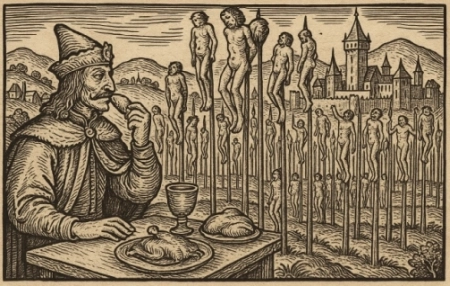
When the Ottoman army approached Târgoviște, chroniclers described a horrifying display of impaled bodies outside the abandoned capital. The scene was intended to warn the invaders that occupation would be costly. Contemporary and later accounts disagree sharply about the number of victims, and some famous totals were enlarged through political propaganda. The display itself is historically credible; the immense numbers repeated in later popular histories are much less certain.
| Event | Vlad’s method | Result |
|---|---|---|
| Danube raids | Winter attacks on Ottoman settlements, garrisons, and supply routes | Provoked Mehmed II’s large-scale invasion of Wallachia |
| Scorched-earth defense | Removed supplies, evacuated communities, and harassed advancing units | Slowed the Ottoman army but placed severe pressure on Wallachian civilians |
| Night Attack | Attempted surprise assault on Mehmed II’s camp | Caused confusion but failed to kill the sultan |
| Impaled display at Târgoviște | Psychological warfare through public execution and terror | Reinforced Vlad’s reputation but did not permanently secure his throne |
Terror as Statecraft: Impalement, Justice, and Propaganda
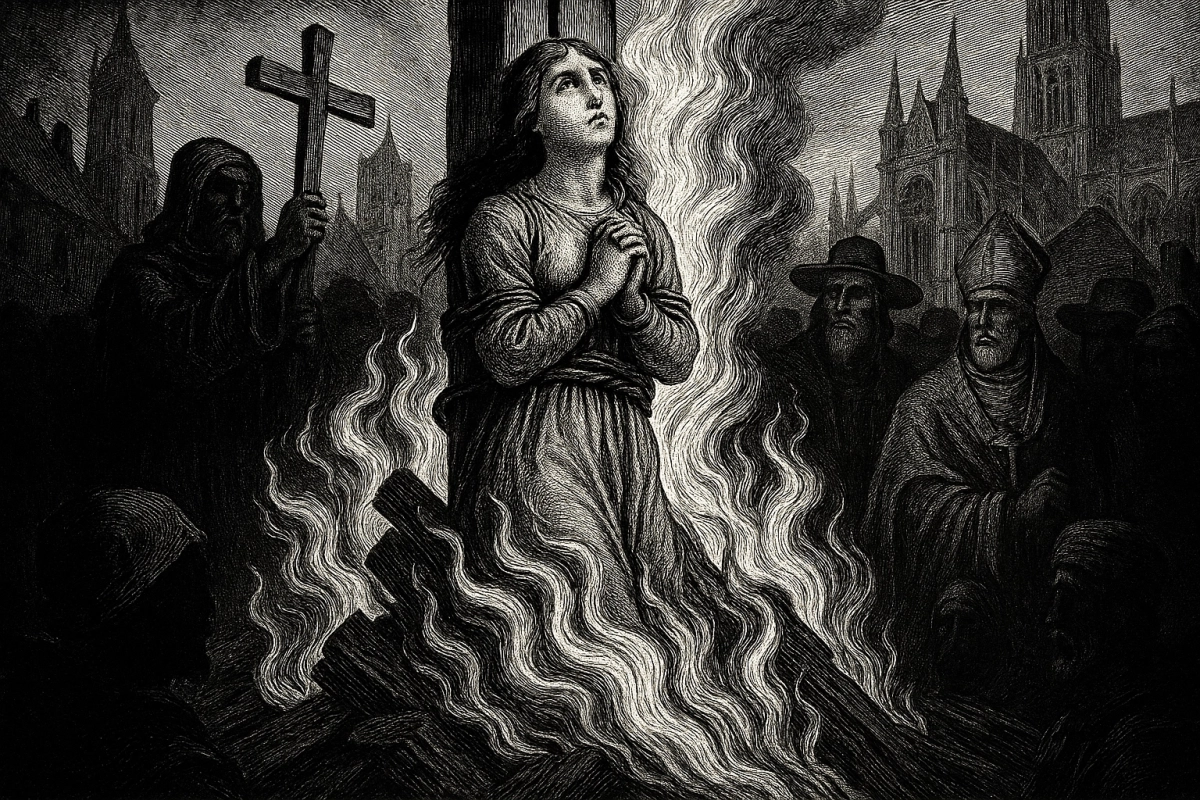
Impalement existed before Vlad and was used in several parts of Europe and the Ottoman world, but no other medieval ruler became so closely associated with it. Vlad used spectacular punishment to intimidate rival nobles, merchants, criminals, enemy soldiers, and communities accused of supporting rival claimants. Executions were not merely penalties; they were public messages about the cost of resistance.
The underlying brutality was real, but the surviving numbers demand caution. A modern reassessment of contemporary documents shows that later German accounts often multiplied smaller, documented executions into massacres involving hundreds or thousands of victims. One hostile story claimed that 500 boyars were killed during an Easter banquet, while archaeological and political evidence suggests a much smaller purge. Such exaggeration does not make Vlad humane — it shows how actual violence was transformed into political literature.
How the Printing Press Helped Create a Monster
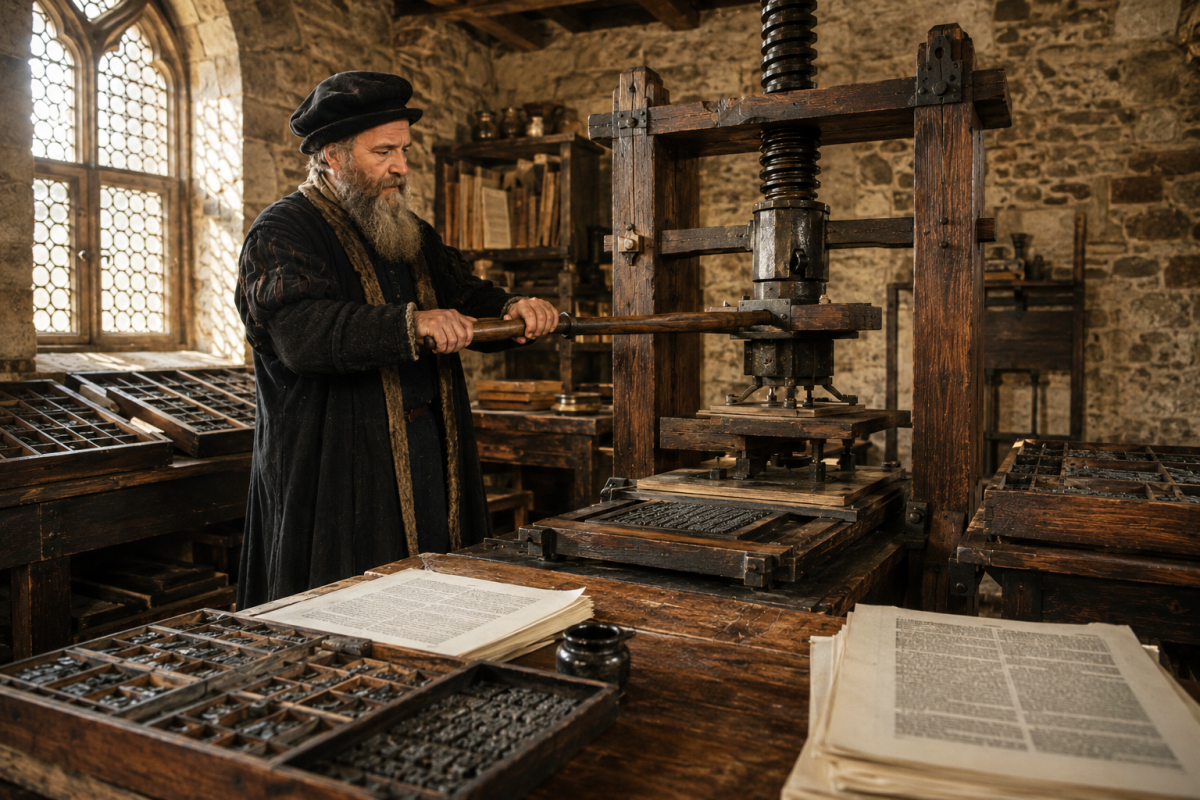
Vlad’s reputation spread at exactly the moment when printed pamphlets were becoming a powerful new form of mass communication. German-language stories described him boiling, burning, mutilating, and impaling victims, while woodcuts showed him calmly dining beside forests of bodies. Some of these publications became early popular successes in the German-speaking world. The same communications revolution explored in The Printing Press and the Birth of the Modern World helped turn a regional Wallachian prince into an internationally recognizable symbol of cruelty.
Lesser-known fact: Russian stories about Vlad sometimes presented his brutality as stern but effective justice, while German pamphlets emphasized sadism and chaos. The contrast shows that his image depended heavily on the political interests of the storyteller.
Poenari and Bran: Which Castle Belonged to the Real Dracula?
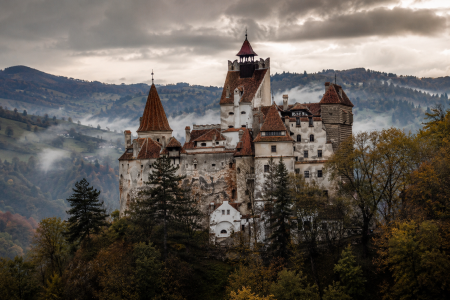
Bran Castle dominates modern Dracula tourism because its towers and mountain setting resemble the imagined world of gothic fiction. Its historical connection to Vlad III, however, is weak. It was not his permanent residence, and the familiar marketing of Bran as “Dracula’s Castle” developed largely through literature, film, and tourism.
Poenari Fortress, high above the Argeș valley, has a stronger connection to Vlad’s military career. The site existed before his reign but was traditionally associated with reconstruction or reinforcement under his authority. Its narrow ridge, steep approaches, and commanding view suited a ruler who depended on defensible mountain routes and rapid movement between Wallachia and Transylvania.
Even Poenari should not be imagined as the vast Transylvanian palace of Bram Stoker’s novel. It was a compact strategic fortress rather than an aristocratic vampire residence. The distinction between Bran, Poenari, and Stoker’s fictional castle is another example of how the Dracula legend reshaped the geography of Vlad’s life.
Hungarian Captivity, Third Reign, and Vlad the Impaler’s Death
Vlad’s position collapsed after the 1462 campaign. His brother Radu, supported by the Ottomans and by Wallachian nobles who had abandoned Vlad, gained control of the principality. Vlad traveled to seek assistance from King Matthias Corvinus of Hungary, but instead of receiving an immediate rescue army, he was arrested and detained. Stories of his cruelty circulated widely during these years and helped Matthias explain why a supposed Christian ally had been imprisoned rather than supported.
Vlad eventually returned to political and military service and regained the Wallachian throne in 1476 with Hungarian and Moldavian backing. His third reign lasted only a short time. He was killed during fighting late in 1476 or very early in 1477, probably while confronting forces supporting a rival claimant.
The exact circumstances of Vlad the Impaler’s death remain uncertain. Some accounts say he was killed by Ottoman troops; others claim his own soldiers mistook him for an enemy during the confusion of battle. Later reports state that his head was taken to Constantinople and displayed as proof of his death. His burial place is also disputed, despite long-standing traditions connecting him with Snagov Monastery.
Dracula Myth vs Reality
Was Dracula real? Bram Stoker’s vampire was fictional, but his name had a historical source. While researching Wallachia and Moldavia, Stoker encountered the name Dracula in William Wilkinson’s early 19th-century history of the region. His working notes suggest that the villain was originally called “Count Wampyr” before the more memorable name Dracula was adopted.
The connection to Vlad III should not be overstated. Wilkinson’s account gave Stoker fragments of Wallachian history and the Dracula name, but it did not provide the detailed biography of Vlad the Impaler familiar to modern audiences. Stoker’s surviving notes do not show that he based the Count’s vampirism, appearance, castle, or major crimes on Vlad’s life. Count Dracula is best understood as a Victorian gothic creation who borrowed a historically powerful name.
| Dracula myth | Vlad the Impaler history |
|---|---|
| Count Dracula is an immortal vampire who survives by drinking blood. | Vlad III was a mortal 15th-century prince of Wallachia with no historical connection to vampirism. |
| Dracula rules from an ancient castle deep in Transylvania. | Vlad ruled Wallachia; Bran Castle was not his residence, while Poenari has the stronger historical connection. |
| The name Dracula identifies a supernatural creature. | The historical name derived from Vlad II Dracul and the Order of the Dragon. |
| Stoker recreated Vlad the Impaler’s personality and biography. | Stoker mainly borrowed the Dracula name and limited Wallachian history rather than Vlad’s complete life story. |
| Dracula’s violence is magical and predatory. | Vlad used execution and public terror as political punishment and psychological warfare. |
| The historical Dracula was simply a fictional monster brought to life. | Vlad was a contested ruler remembered as a tyrant, centralizer, warrior, and opponent of Ottoman expansion. |
Vlad the Impaler’s Divided Legacy
Vlad III left two overlapping legacies. In parts of Romanian historical memory, he became a severe ruler who punished corruption, imposed order, and resisted Ottoman domination. In the German-speaking lands, printed accounts presented him as a sadistic tyrant whose cruelty exceeded ordinary warfare. Neither tradition is a neutral photograph of the past; both selected events that served later political and cultural needs.
That division began during Vlad’s own lifetime. His enemies had strong reasons to emphasize stories of mass execution, while supporters could frame the same brutality as ruthless justice or necessary wartime discipline. Later chroniclers repeated and reshaped these traditions, making it increasingly difficult to separate documented violence from exaggeration, propaganda, and moral storytelling.
In Romanian culture, Vlad was gradually remembered less as a monster than as a ruler who defended Wallachian independence and imposed harsh order in a dangerous political environment. This image became especially influential in the 19th century, when national histories across Europe were turning medieval rulers into symbols of resistance, statehood, and identity. The result was a figure who could be remembered as both terrifying and admirable, depending on who was telling the story.
Bram Stoker then gave the name Dracula an entirely new life. The Wallachian prince, the German pamphlet monster, the Romanian defender, and the fictional vampire gradually merged in popular culture. That fusion explains why searches for the real Dracula lead back to Vlad the Impaler even though the historical man never drank blood, lived in Stoker’s Transylvanian castle, or commanded supernatural powers.
The connection between Vlad and Stoker’s vampire is also thinner than popular culture often suggests. Stoker appears to have borrowed the name Dracula and some historical references, but the fictional count’s personality, supernatural powers, Transylvanian setting, and biography were largely literary creations rather than a direct portrait of Vlad III. The modern image of “Vlad Dracula the vampire” is therefore mostly a later fusion of history and fiction.
Fast Facts
-
Also known as:
Vlad III, Vlad Țepeș, Vlad III Dracula.
Why it mattered: Highlights the blending of history and legend.
-
Reigns:
1448; 1456—1462; 1476.
Why it mattered: Three contested reigns show Wallachia's volatile power struggles.
-
Realm & Capital:
Principality of Wallachia; capital at Târgoviște.
Why it mattered: A frontier state between Hungary and the Ottoman Empire.
-
Signature Tactic:
Impalement as exemplary punishment.
Why it mattered: Psychological warfare to deter invasion and crush internal dissent.
-
Name Origin:
“Dracula” = “son of Dracul,” from the Order of the Dragon.
Why it mattered: Later fueled the Dracula myth and popular culture associations.
-
Death:
Killed in battle in 1476; head reportedly sent to Constantinople.
Why it mattered: Marked the end of a brutal but formative chapter in Wallachian rule.
Vlad the Impaler & Dracula — Frequently Asked Questions
Was Vlad the Impaler a hero or a villain?
It depends on perspective. Some Romanian traditions portray Vlad as a stern but necessary defender who restored order and resisted Ottoman pressure. Foreign pamphlets, especially from Saxon and later Central European printers, emphasized his cruelty and turned him into a symbol of barbaric tyranny.
Did Vlad III directly inspire Bram Stoker's Dracula?
Stoker borrowed the name “Dracula” and some background notes on a Wallachian ruler, but the novel's plot and many details draw more on Victorian gothic fiction than on Vlad's actual life. The connection is real in terms of branding, yet limited when it comes to precise historical events.
Where is the “real” Dracula castle?
Bran Castle is famous, but its link to Vlad is tenuous. Sources more firmly associate him with Poenari Castle in the Argeș valley, a mountaintop fortress rebuilt during his reign and used as a strategic stronghold.
How does Vlad compare to other “dark history” figures?
Vlad's blend of real political power and later myth mirrors other infamous figures whose stories sit between fact and legend, such as Elizabeth Báthory or the interrogators of the Inquisition. All three are featured in the Dark History collection.
Who was Vlad the Impaler?
Vlad the Impaler was Vlad III Dracula, a 15th-century voivode who ruled Wallachia three times. He is best known for using impalement and other severe punishments, resisting Ottoman expansion, and inspiring the historical name later associated with Bram Stoker’s Count Dracula.
When and where was Vlad the Impaler born?
Vlad was probably born between 1428 and 1431. Sighișoara in Transylvania is traditionally identified as his birthplace because his father lived there, but historians cannot confirm the location with certainty. Târgoviște, the Wallachian royal center, has also been proposed.
What happened during Vlad the Impaler’s Night Attack?
During the night of 16–17 June 1462, Vlad led Wallachian troops into the camp of Sultan Mehmed II. His apparent goal was to kill the sultan and disrupt the Ottoman invasion. The attack caused confusion and casualties but failed to reach Mehmed, making it a daring tactical operation rather than a decisive Wallachian victory.
How did Vlad the Impaler die?
Vlad was killed during fighting in late 1476 or early 1477, shortly after regaining the Wallachian throne. The details remain disputed. Some sources blame Ottoman troops, while another tradition says his own men mistook him for an enemy. His head was reportedly sent to Mehmed II in Constantinople.
Was the real Dracula a vampire?
No. Vlad III was a historical prince, not a supernatural vampire. Bram Stoker borrowed the name Dracula from Wallachian history, but Count Dracula’s blood-drinking, immortality, and supernatural powers came from gothic fiction and vampire folklore.
Sources & References
- Matei Cazacu, Dracula (Brill, 2017).
- Kurt W. Treptow, Vlad III Dracula: The Life and Times of the Historical Dracula (Center for Romanian Studies, 2000).
- Denis Harai, “Counting the Stakes: A Reassessment of Vlad III Dracula’s Practice of Collective Impalements in Fifteenth-Century Southeastern Europe,” Transactions of the Royal Historical Society.
- Robert Eighteen-Bisang and Elizabeth Miller, Bram Stoker’s Notes for Dracula: A Facsimile Edition (McFarland, 2008).
- Roger Luckhurst, ed., The Cambridge Companion to Dracula (Cambridge University Press, 2017).
- Encyclopaedia Britannica, “Vlad the Impaler.”
- British Library, “Bram Stoker’s Dracula,” on the novel’s literary origins and Victorian context.
- National Geographic History, “Vlad the Impaler’s Thirst for Blood Was an Inspiration Behind Count Dracula.”
More Articles