Medieval Jobs: Dirty and Deadly Work in Medieval Europe
From urine-soaked cloth and tanning pits to collapsing mines, plague graves, and overflowing cesspits—someone had to do the work.
Introduction
Medieval jobs rarely came with safety glasses, paid leave, clean drinking water, or a helpful notice reminding employees to lift with their knees. For millions of medieval workers, daily life meant physical labor performed around open flames, sharp tools, animal carcasses, poisonous fumes, human waste, unstable scaffolding, freezing seas, or poorly supported tunnels. Even an ordinary cut could become a serious problem in a world without modern antibiotics.
Yet the dirtiest and most dangerous jobs in the Middle Ages were also essential. Fullers finished cloth. Tanners produced leather. Charcoal burners supplied fuel. Masons raised castles and cathedrals. Miners extracted the metals behind weapons, tools, and coins. Sailors carried goods between ports. Butchers fed towns, millers processed grain, and sanitation workers dealt with the inevitable consequences of thousands of people living close together.
The history of medieval jobs therefore reveals more than misery. It shows the skills, wages, social hierarchies, risks, and routines of the people who kept medieval Europe functioning while kings, knights, bishops, and merchants received most of the historical attention.
What Was Working Life Like in Medieval Europe?
There was no single medieval labor market. A worker in 13th-century London lived in a different economic world from a miner in Bohemia, a sailor in Venice, or a peasant in rural France. Some people earned daily wages. Others were paid by the task, by the piece, by the load, through annual service contracts, or partly in food and lodging. Craftsmen could own workshops, while apprentices might receive little cash but gain training, meals, and accommodation.
Skill mattered enormously. Master craftsmen could earn substantially more than ordinary laborers. In England, the 1351 Statute of Labourers attempted to set a master mason’s wage at four pence per day, other masons at three pence, and their assistants at one and a half pence during the main working season. Such laws were attempts to control wages rather than reliable descriptions of what every worker actually received.
The Black Death complicated everything. With fewer workers available after 1348, surviving laborers in many places could demand better compensation. Governments and employers resisted. Medieval wages, therefore, were shaped by skill, scarcity, law, bargaining power, meals, season, and local custom—not by a tidy salary scale.
| Occupation | Typical Status / Pay | Main Hazards | Dirty / Deadly Rating |
|---|---|---|---|
| Fuller | Skilled cloth worker; wages or workshop income varied. | Chemicals, stale urine, heavy wet cloth, repetitive labor. | Very Dirty |
| Tanner | Skilled craft; potentially profitable but often socially undesirable. | Rotting hides, lime, animal waste, polluted water. | Extremely Dirty |
| Charcoal Burner | Rural specialist; often paid by output or supply contract. | Smoke, carbon monoxide, burns, isolation, fire. | Dirty & Dangerous |
| Stonemason | Skilled and comparatively well-paid building trade. | Falls, collapsing stone, dust, lifting injuries. | Dangerous |
| Cesspit Cleaner | Low-status sanitation work; payment often by task. | Human waste, toxic gases, drowning, infection. | Nightmare |
| Executioner | Municipal or lordly employee; could receive salary and fees. | Violence, social stigma, angry crowds, botched executions. | Grim |
| Gravedigger / Corpse Handler | Low to modest status; demand increased during epidemics. | Disease exposure, exhaustion, heavy lifting. | Deadly During Plague |
| Miner | Important skilled or semi-skilled labor; sometimes privileged. | Cave-ins, flooding, bad air, dust, fire. | Extremely Dangerous |
| Butcher | Established urban trade, often guild-regulated. | Knives, livestock, blood, contaminated waste. | Bloody |
| Miller | Economically important; could be relatively prosperous. | Heavy millstones, gears, dust, water machinery. | Moderately Dangerous |
| Sailor | Paid wages or shares depending on voyage and region. | Storms, drowning, disease, piracy, shipwreck. | Very Deadly |
Fullers and Tanners: Medieval Europe’s Smelliest Industries
Fullers: Cleaning Cloth the Unpleasant Way
Medieval fullers worked in the enormous textile industry. Newly woven wool cloth had to be cleaned, thickened, and felted. Workers repeatedly beat or trampled wet cloth in tubs. Water, alkaline substances, clay, soap-like materials, and in some places stale urine could help remove grease from wool.
The smell was not a minor occupational inconvenience. Fulling could involve hours around wet wool and foul liquids, while manual trampling was exhausting. From the medieval period onward, water-powered fulling mills mechanized part of the process in some regions, replacing feet with wooden hammers. The job became less foot-powered, although not necessarily more fragrant.
Tanners: Leather, Lime, Dung, and Rotting Flesh
If the fuller’s workshop smelled bad, the tannery could compete enthusiastically. Tanners transformed animal hides into durable leather for shoes, belts, saddles, armor components, containers, and countless everyday objects.
Hides were soaked, scraped, dehaired, treated, and immersed in tanning solutions. Lime, urine, animal dung, decaying tissue, and large amounts of dirty water could all be part of leather processing depending on place and period. Because tanning generated strong odors and polluted water, authorities often concentrated or restricted the trade near waterways or away from prestigious urban spaces.
Charcoal Burners: Sleeping Beside a Controlled Fire
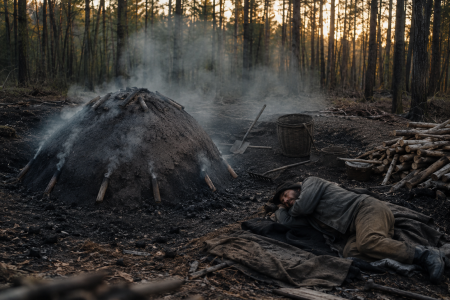
Medieval metalworking consumed fuel, and charcoal was essential. Charcoal burners worked in forests, stacking carefully selected wood into mounds or pits and covering it so that it heated with limited oxygen. Too much air could turn days of work into an ordinary bonfire. Too little control could ruin the batch.
The burner had to monitor the slow process for long periods, sometimes day and night. Smoke inhalation, burns, accidental fires, falling timber, isolation, and exposure to weather were normal risks. Charcoal production could also operate on a remarkable scale around important mining and metalworking centers.
The job lacked the glamour of the swordsmith, but without charcoal there was no large supply of iron tools, nails, weapons, or fittings. Medieval industry quite literally depended on people spending their lives watching wood almost—but not quite—burn.
Stonemasons and Cathedral Workers: Skilled Work at Fatal Heights
Stonemasons belonged to the more skilled medieval trades. Master masons could command higher wages and considerable respect because monumental construction demanded geometry, planning, stone knowledge, and years of training.
Their workplace, however, could be lethal. Stones weighing hundreds of kilograms moved through construction sites using ropes, pulleys, cranes, carts, and human power. Workers stood on timber scaffolding high above the ground. Falling stone, failed lifting gear, collapsing structures, cuts, crushed hands, respiratory dust, and falls were serious hazards.
Cathedral building employed far more than masons. Carpenters erected roofs and scaffolding. Quarry workers cut stone. Blacksmiths produced tools and iron fittings. Glassmakers created windows. Laborers hauled materials. The extraordinary structures examined in Gothic Cathedrals: Engineering the Medieval Sky were therefore also enormous medieval workplaces.
Cesspit Cleaners and “Gong Farmers”: The Bottom of the Job Market
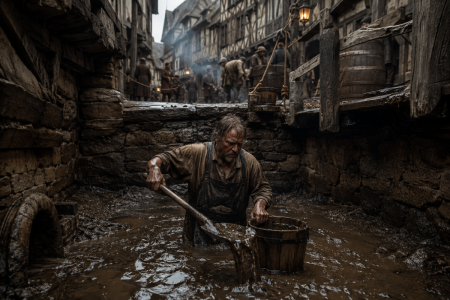
Medieval towns produced human waste on an impressive scale. Privies, latrines, cesspits, gutters, yards, and waterways all required some form of cleaning. Someone had to climb into pits, shovel out the contents, load the waste, and remove it.
Popular histories often call these medieval workers gong farmers. The work certainly existed in the medieval period, but the English occupational term gong farmer is best documented in the Tudor era. For a strictly medieval setting, “cesspit cleaner,” “privy cleaner,” or waste-removal worker is safer.
Whatever the name, the work was appalling. Deep pits could contain dangerous gases and liquid waste. Workers faced infection, falls, suffocation, and the obvious possibility of drowning somewhere no human being would want listed on a death certificate. Waste could nevertheless have value as fertilizer, giving this deeply unpleasant occupation an economic purpose.
Executioners: Paid to Do What Everyone Else Watched
Executioners occupied a strange position. Governments needed them, crowds watched them, and respectable society could simultaneously avoid them. Their responsibilities might include hanging, beheading, corporal punishment, torture where legally authorized, and maintaining execution equipment. In some places they performed other unpleasant municipal duties as well.
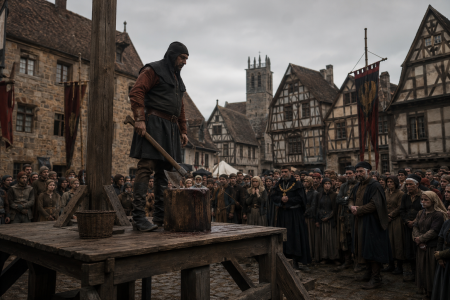
Payment varied widely. Some executioners received salaries from towns or rulers plus fees for individual punishments. The better-documented hereditary executioner families of central Europe belong especially to the late medieval and early modern periods, when the occupation could carry pronounced social stigma.
The job also required skill. A failed beheading was not merely embarrassing. It could horrify a crowd, prolong suffering, and provoke anger toward the executioner. Medieval justice could be brutal, but even brutality apparently had performance standards.
Gravediggers, Corpse Handlers, and Plague-Era Workers
During ordinary years, burial involved clergy, sextons, gravediggers, family members, and others connected to the churchyard. Epidemics transformed burial into an emergency service.
When plague struck, the number of dead could overwhelm normal burial customs. Workers moved bodies, opened graves, transported corpses, cleared houses, and buried victims under conditions of fear and exhaustion. People did not understand the bacterium Yersinia pestis or the complex role of fleas and rodents, leaving workers with little effective protection.
Labor shortages could make dangerous work more valuable, but high pay was poor compensation when the workplace was an epidemic. The wider catastrophe and its social consequences are explored in The Black Death Unleashed: Plague Ships to Graves.
Medieval Miners: Underground Without a Hard Hat
Medieval miners extracted silver, copper, iron, lead, tin, salt, coal, and other resources from increasingly ambitious workings. Mining districts could become economically important enough for rulers to grant miners special rights and privileges.
Underground conditions remained brutal. Tunnels could collapse. Water could flood workings. Ventilation was primitive. Workers dealt with smoke, dust, poor light, heavy loads, and the dangers of breaking rock in confined spaces. Fire-setting—heating rock and then breaking the fractured surface—added heat and smoke to an already unpleasant workplace.
Yet medieval warfare, coinage, construction, agriculture, and craft production all required metal. The miner at the bottom of a shaft was therefore connected directly to the knight’s armor, the mason’s chisel, the farmer’s tools, and eventually the gunpowder weapons discussed in Knights to Cannons: The Gunpowder Revolution.
Butchers, Millers, Rat Catchers, and Other Urban Work
Butchers
Butchers were essential craftsmen with a permanently bloody workplace. They handled live animals, sharp knives, carcasses, organs, hides, bones, and large quantities of waste. Town governments increasingly regulated where animals could be slaughtered and where refuse could be dumped because badly managed butchery polluted streets and water.
Millers
Millers occupied a more comfortable economic position than many manual laborers because grain had to be ground and mills were valuable properties. Many peasants were required to use a lord’s mill and surrender a toll from their grain.
That arrangement also made millers easy to distrust. Medieval records repeatedly contain disputes over excessive tolls. The stereotype of the dishonest miller was not created by accident. The machinery itself also posed dangers from millstones, wheels, gears, dust, and fast-moving water.
Rat Catchers—With a Warning
Rats and other vermin were certainly medieval problems, and traps, poisons, cats, dogs, and local pest-control measures existed. However, the professional municipal “rat catcher” familiar from later European history is much better documented in the early modern period. It is therefore safer to describe medieval vermin control as a task performed by householders and assorted workers rather than imagine every medieval town employing a dedicated Pied Piper.
Bell Ringers and Sailors: Danger Above and Below
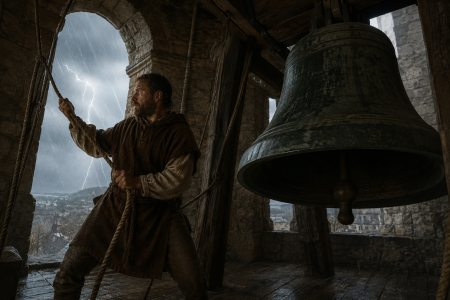
Church bells regulated medieval communities. They marked worship, funerals, warnings, fires, celebrations, and time. Ringing duties could be performed by clerks, sextons, servants, or other church personnel rather than a universal professional class of full-time bell ringers.
Bell work involved heavy ropes, towers, ladders, timber frames, and enormous suspended pieces of metal. Casting, hanging, repairing, and ringing large bells brought obvious physical risks even if bell ringing itself was not among the era’s most consistently deadly occupations.
Sailors had a stronger claim to that title. Medieval shipping exposed crews to drowning, storms, shipwreck, piracy, warfare, contaminated food and water, disease, cold, cramped quarters, and accidents with rigging and cargo. A merchant voyage could produce a handsome profit for investors while leaving the sailor personally acquainted with every possible way a wooden ship could become a coffin.
The long-distance commercial networks experienced by travelers such as Marco Polo depended on these merchants, caravan workers, porters, pilots, and sailors whose names rarely survived.
Pay, Skill, and Social Status: Not Every Dirty Job Was a Bad Job
Dirt did not always equal poverty. A successful butcher, miller, tanner, master mason, or merchant sailor could occupy a respectable economic position. Skilled craftsmen might belong to guilds, train apprentices, own workshops, and participate in urban government.
Conversely, socially necessary jobs involving corpses, punishment, waste, or animal remains could carry stigma even when the work paid reasonably well. Medieval society often judged occupations through ideas about honor, bodily pollution, guild membership, legal status, and proximity to blood or death.
Wages also cannot be converted neatly into modern dollars. A penny in 1350 had meaning within an economy where meals might be included in wages, rent and food costs differed sharply by region, and many households combined paid work with agriculture, family labor, and informal exchange. Medieval workers lived in an economy of obligations as much as salaries.
Fast Facts: Medieval Jobs
-
Skilled workers could earn much more:
Master masons and other trained craftsmen generally commanded better pay than ordinary laborers and assistants.
-
The Black Death strengthened labor bargaining power:
Severe population loss created worker shortages and contributed to wage pressure in many regions.
-
“Gong farmer” is slightly anachronistic:
Medieval cesspit cleaning existed, but the famous English job title is primarily documented from Tudor England.
-
Urine was useful:
Its ammonia made stale urine valuable in some textile-cleaning and processing activities.
-
Bad smells shaped city planning:
Tanneries, slaughtering, waste disposal, and other offensive trades were often subject to urban regulation.
-
Danger could come with prestige:
Cathedral masons faced serious physical risks while belonging to one of medieval Europe’s most skilled trades.
What Was the Worst Job in the Middle Ages?
There is no objective winner, which is fortunate because the competition is disturbing. A miner risked burial underground. A sailor risked drowning hundreds of kilometers from home. A plague gravedigger worked while an epidemic killed neighbors by the thousands. A tanner spent years around decomposing hides and caustic substances.
For sheer filth, cesspit cleaning is difficult to defeat. For long-term physical danger, mining and seafaring are stronger candidates. For social isolation, the executioner deserves consideration. And for the unusual combination of bad smell, repetitive labor, and urine, the fuller deserves at least a dishonorable mention.
The better historical lesson is that these were not novelty jobs invented to make the Middle Ages seem disgusting. They were necessary parts of real economies. Medieval cities could not function without people willing—or economically compelled—to perform them.
Conclusion: The Workers Behind Medieval Europe
Medieval Europe was built by far more than knights, kings, monks, and nobles. Its streets, markets, ships, mines, mills, workshops, cathedrals, graveyards, and sanitation systems depended on workers whose names usually disappeared from written history.
Some medieval jobs were filthy. Others were deadly. Many managed to be both. Yet these occupations also demanded endurance, specialized knowledge, practical intelligence, and skills learned over years. The tanner who turned a rotting hide into durable leather, the mason who understood how stone carried weight, and the sailor who read wind and coastline all possessed knowledge essential to medieval society.
Looking at medieval workers therefore changes the familiar image of the Middle Ages. Behind every castle wall, wool cloak, church bell, leather shoe, silver coin, loaf of bread, and merchant ship stood someone doing the dangerous work that made it possible.
Medieval Jobs — Frequently Asked Questions
What jobs did people have in medieval times?
Medieval people worked as farmers, laborers, servants, merchants, sailors, millers, bakers, butchers, smiths, carpenters, masons, miners, tanners, fullers, weavers, clerks, soldiers, sanitation workers, and in many other specialized occupations.
What were the worst jobs in the Middle Ages?
Among the strongest candidates were cesspit cleaning, tanning, mining, plague-era corpse handling, execution work, charcoal burning, and dangerous maritime labor. Each combined different levels of filth, physical danger, disease exposure, or social stigma.
How much did medieval workers earn?
Wages varied dramatically by place, date, skill, season, and occupation. As one English example, the 1351 Statute of Labourers listed four pence per day for a master mason, three pence for other masons, and one and a half pence for their assistants during the main working season. Actual market wages did not always follow legal limits.
What did a medieval fuller do?
Fullers cleaned and thickened newly woven wool cloth through washing, beating, trampling, and other treatments. Some processes used alkaline substances including stale urine, while water-powered fulling mills later mechanized much of the beating process.
What did a medieval tanner do?
Tanners transformed animal hides into leather by soaking, scraping, dehairing, and treating them with various substances before prolonged tanning. The trade produced valuable goods but also severe odors and waste.
Were there really gong farmers in medieval Europe?
Workers certainly cleaned medieval privies and cesspits. However, the specific English term “gong farmer” is better documented from the Tudor period. Calling earlier workers cesspit or privy cleaners is historically more precise.
Were medieval executioners social outcasts?
Executioners could experience substantial social stigma, particularly in parts of central Europe, but their status varied by place and period. They were necessary public employees rather than universally isolated pariahs.
Did the Black Death increase medieval wages?
In many areas, severe population losses reduced the supply of labor and strengthened surviving workers’ bargaining position. Authorities sometimes attempted to restrict the resulting wage increases, as England did through labor legislation after the plague.
Sources & References
- Dyer, Christopher, Making a Living in the Middle Ages: The People of Britain, 850–1520, Yale University Press, 2002.
- Rosser, Gervase, The Art of Solidarity in the Middle Ages: Guilds in England, 1250–1550, Oxford University Press, 2015.
- Rawcliffe, Carole, Urban Bodies: Communal Health in Late Medieval English Towns and Cities, Boydell Press, 2013.
- Salzman, L. F., Building in England Down to 1540: A Documentary History, Oxford University Press.
- Hatcher, John, Plague, Population and the English Economy, 1348–1530, Macmillan, 1977.
- Bennett, Judith M., Ale, Beer, and Brewsters in England: Women’s Work in a Changing World, 1300–1600, Oxford University Press, 1996.
- Stuart, Kathy, Defiled Trades and Social Outcasts: Honor and Ritual Pollution in Early Modern Germany, Cambridge University Press, 1999.
- Victoria County History / Institute of Historical Research, regional studies of medieval mills, cloth production, trades, woodland use, and local economies.
- Cambridge Economic History of Europe, studies of medieval mining, metallurgy, industry, labor, and economic organization.
- Statute of Labourers, 1351, England—medieval legislation regulating wages and labor after the Black Death.