Machu Picchu: The Lost City of the Incas
High above Peru’s Urubamba River, Machu Picchu preserves the remains of an Inca royal estate — a place that became famous as a “lost city” even though it was never truly forgotten.
Machu Picchu: History of the Lost Inca City
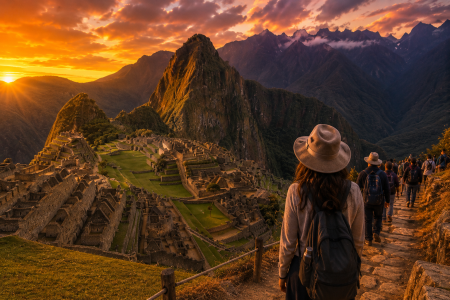
Machu Picchu stands approximately 2,430 meters (7,970 ft) above sea level on the eastern slopes of the Peruvian Andes, where steep mountains descend toward the upper Amazon basin. Built during the 15th century, the complex contains around 200 known structures surrounded by agricultural terraces, stairways, plazas, fountains, canals, and carefully fitted stone walls.
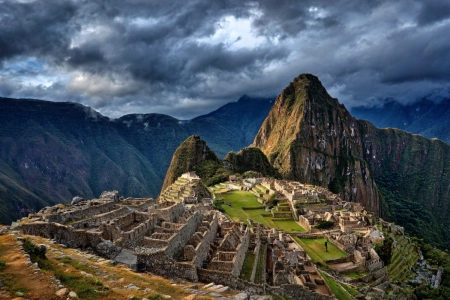
Popularly called the “Lost City of the Incas,” Machu Picchu was not a forgotten city suddenly discovered in 1911. Local Andean residents knew the ruins, people had visited them before Hiram Bingham, and historical documents increasingly suggest that knowledge of a place called Picchu survived well into the colonial era. What happened in 1911 was something different: Machu Picchu entered international archaeology and global popular culture.
Modern research has also changed the way historians understand the site itself. Machu Picchu was probably not a large urban capital or the final refuge of the Inca Empire. The leading interpretation identifies it as a royal estate associated with Pachacuti Inca Yupanqui, combining elite residence, ceremony, agriculture, sacred geography, and imperial display.
Machu Picchu: Quick Answers
| Question | Historical answer |
|---|---|
| When was Machu Picchu built? | Primarily during the 15th century. Radiocarbon evidence indicates activity from about the 1420s. |
| Who built Machu Picchu? | The Inca state, probably as a royal estate associated with Emperor Pachacuti and maintained by workers and retainers drawn from across the empire. |
| Why is Machu Picchu called the Lost City? | The nickname grew from early exploration narratives and Hiram Bingham’s search for the lost Inca capital of Vilcabamba, although local people already knew the ruins. |
| Why was Machu Picchu abandoned? | No single cause is known. Occupation declined around the period of epidemic, Inca civil war, Spanish conquest, and the collapse of the imperial system that supported royal estates. |
| Was Machu Picchu a city? | It is commonly called a city or citadel, but it was probably a specialized royal, residential, agricultural, and ceremonial complex rather than a large urban capital. |
| How old is Machu Picchu? | Roughly six centuries old, depending on which phase of its early-15th-century occupation is used as the starting point. |
Where Is Machu Picchu—and Why Was It Built There?
Machu Picchu occupies a mountain saddle between the peaks known today as Machu Picchu and Huayna Picchu, high above a dramatic bend in the Urubamba River northwest of Cusco. The setting placed the estate several days’ journey from the imperial capital but in a warmer ecological zone where the Andes descend toward tropical forest.
The location was not simply scenic. Inca planners integrated buildings with mountains, springs, rock outcrops, agricultural land, and distant sightlines. Mountains known as apus held deep spiritual significance in Andean belief, and sacred geography shaped how Inca elites understood authority, ancestry, and landscape.
Its position also gave the estate access to resources different from those available around high-altitude Cusco. The warmer valleys of the Urubamba region could support crops such as maize and other products valued by the Inca elite, while roads linked the estate to neighboring settlements and the wider imperial network. Machu Picchu was remote enough to feel secluded, but it was never isolated from the economic and political system of the Inca Empire.
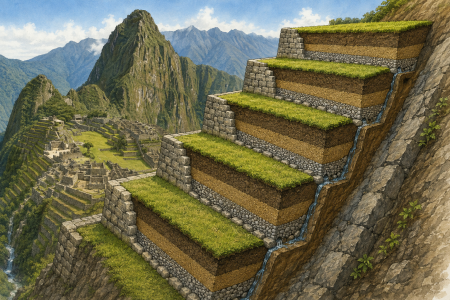
Terraces transformed the steep ridge into usable ground while helping stabilize slopes, manage rainfall, and produce crops. A natural spring provided fresh water, which engineers captured and carried through a carefully graded stone canal toward the residential and ceremonial sectors. In a region of heavy seasonal rain and steep terrain, controlling water was essential not only for daily life but for preventing erosion and structural failure.
The result was not a city imposed on a mountain. The mountain itself became part of the architecture—its slopes shaped the terraces, its spring supplied the fountains, and its surrounding peaks formed part of the sacred landscape experienced by those who lived and gathered there.
Fast Facts: Machu Picchu at a Glance
-
Location:
Urubamba Province, Cusco Region, Peru.
-
Elevation:
Approximately 2,430 m — 7,970 ft above sea level.
-
Built:
15th century, with occupation beginning by about the 1420s according to radiocarbon dating.
-
Culture:
Inca Empire, or Tawantinsuyu.
-
Likely purpose:
Royal estate, ceremonial center, agricultural complex, and sacred landscape associated with Pachacuti.
-
Structures:
Approximately 200 buildings and structures spread across agricultural and urban sectors.
-
Population:
Probably several hundred permanent residents and workers, with a larger population possible during royal visits and ceremonies.
-
Abandoned:
Regular occupation appears to have ended around the early 16th century.
-
UNESCO status:
Historic Sanctuary of Machu Picchu, inscribed as a mixed World Heritage property in 1983.
-
Modern fame:
International recognition followed Hiram Bingham’s 1911 expedition and extensive publicity beginning in the early 20th century.
Who Built Machu Picchu—and When?
The dominant archaeological interpretation links Machu Picchu with Pachacuti Inca Yupanqui, the ruler traditionally credited with transforming the Cusco kingdom into an expanding Inca Empire during the 15th century. Royal estates allowed rulers and their families to control land, host ceremonies and political gatherings, produce prestigious crops, and display authority across the landscape.
Saying that Pachacuti “built Machu Picchu,” however, can hide the enormous labor behind the site. The emperor did not personally cut terraces or shape granite blocks. Construction depended on architects, stonemasons, engineers, agricultural workers, retainers, and labor mobilized through the Inca state.
Archaeological evidence from burials indicates that people living at Machu Picchu came from different parts of the empire. Some permanent residents were probably yanaconas — retainers serving elite households — while others belonged to communities moved or assigned to imperial service.
Radiocarbon Dating Changed the Timeline
For decades, historians relied heavily on colonial chronicles to place Pachacuti’s rise and Machu Picchu’s construction after about 1440. A major 2021 AMS radiocarbon study of human remains from Machu Picchu produced an earlier chronology.
The results indicate that people were using the site from approximately 1420 to 1530. That does not necessarily disprove the association with Pachacuti, but it suggests that traditional dates for his reign and early imperial expansion may need adjustment.
What historians agree on: Machu Picchu belongs to the great period of Inca imperial expansion in the 15th century. The exact year construction began remains uncertain.
Was Machu Picchu a City, Fortress, Temple, or Royal Estate?
Machu Picchu has been called a city, citadel, fortress, sanctuary, monastery, observatory, and royal retreat. Some of these labels reflect genuine features of the site, while others grew from early speculation.
| Interpretation | Evidence | Current assessment |
|---|---|---|
| Royal estate | Elite residences, carefully planned architecture, agricultural estates, ceremonial spaces, and association with Pachacuti. | Leading interpretation. |
| Ceremonial center | Temples, sacred rocks, fountains, astronomical orientations, and dramatic mountain setting. | Strong evidence; probably part of the estate’s function rather than a separate purpose. |
| Astronomical center | Solar relationships have been proposed for the Temple of the Sun, Intihuatana, and other features. | Astronomy probably mattered, but exact functions of individual structures remain debated. |
| Fortress | Naturally defensible terrain, gates, walls, and strategic location. | Defense may have mattered, but the site does not appear to have been primarily a military fortress. |
| Last Inca capital | Hiram Bingham initially connected Machu Picchu with Vilcabamba. | Rejected. The last Inca refuge is associated with the Vilcabamba region and Espíritu Pampa. |
Inside the Inca Citadel: Terraces, Temples, and Stonework
Machu Picchu is organized into agricultural and built-up zones connected by stairways and paths. A major drainage channel often called the Dry Moat helps separate the agricultural sector from the principal built area while carrying runoff away from the site.
Not every building uses the perfectly fitted masonry seen in photographs. High-status ceremonial and elite structures received exceptionally fine stonework, while buildings of lower status could use rougher construction. This architectural hierarchy helped communicate social and ritual importance.
Temple of the Sun and the Sacred Landscape
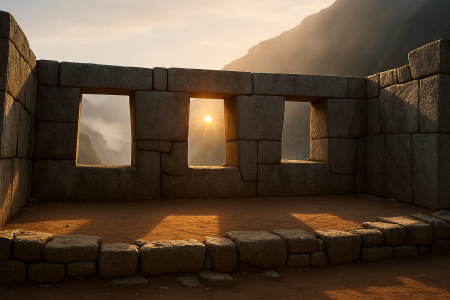
Among the most prominent structures are the Temple of the Sun, the Temple of the Three Windows, the Principal Temple area, and the carved stone known as the Intihuatana.
These features are often described as observatories. Solar relationships clearly mattered in Inca ritual and architecture, but historians should be careful about assigning a precise astronomical purpose to every carved stone or window. The exact role of the Intihuatana, for example, remains debated.
Roads, Gates, and the Inca Trail
Machu Picchu was not isolated from the Inca world. Roads and trails connected it with surrounding settlements and the broader imperial road system. Travelers approaching from the direction of Inti Punku, the Sun Gate, encounter one of the most dramatic views of the complex as the terraces and buildings emerge against Huayna Picchu.
This controlled approach reinforces an important point: Machu Picchu was not merely architecture sitting in scenery. Movement through the mountains, gates, plazas, sacred rocks, watercourses, and sightlines helped create the experience of the estate.
What Did Machu Picchu Look Like in Its Prime?
Modern photographs show roofless gray stone ruins, but the living estate would have looked very different in the 15th century. Most buildings originally had wood-and-thatch roofs, creating rows of golden-brown rooflines above the pale granite walls.
The terraces were maintained rather than overgrown. Some supported maize and other crops, while additional food and supplies arrived from estates at lower elevations. Fresh spring water flowed continuously through stone channels and a chain of fountains.
Permanent residents included retainers, agricultural workers, craftspeople, and specialists. During visits by the ruler or members of the royal lineage, the population would have expanded with officials, servants, guards, guests, and religious personnel.
Smoke from cooking fires, brightly woven textiles, cultivated terraces, running water, roofed residences, ceremonies, animals, and constant labor would have made Machu Picchu far more colorful and active than the silent stone complex visitors see today.
Machu Picchu’s Engineering: Stone, Water, and Earthquakes
Machu Picchu survives in an unusually difficult environment. The ridge receives heavy seasonal rainfall, contains steep slopes, and lies in a seismically active region. Water management was therefore one of the greatest challenges faced by its builders.
The famous stone walls are only the visible part of the engineering. In many areas, layers of rubble, gravel, sand, and soil beneath terraces and plazas allowed water to drain through the ground rather than accumulate around walls and foundations.
More than a hundred surface drains carried storm water away from buildings. The main drainage channel crossed the ridge and discharged excess water downslope, while agricultural terraces helped stabilize vulnerable terrain.
Sixteen Fountains Fed by a Mountain Spring
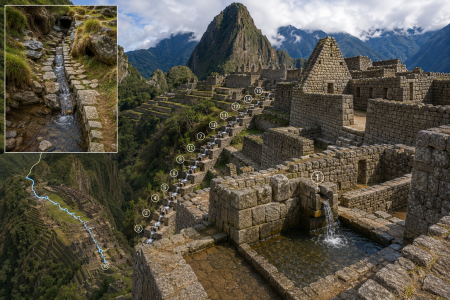
Engineers captured a natural spring on Machu Picchu Mountain and routed its water through a stone-lined canal toward the built complex. The system supplied a sequence of 16 fountains, with the first major fountain placed near the royal residential area.
The arrangement demonstrates sophisticated gravity-fed hydraulic planning. Engineers had to know where the spring flowed, how much water it produced, how steeply the canal should descend, and where overflow would be safely discharged during intense rainfall.
Why the Walls Survive Earthquakes
Elite Inca masonry used carefully shaped stones fitted closely without conventional mortar. Trapezoidal doorways, inward-leaning walls, strong foundations, and closely fitted blocks helped buildings withstand seismic movement better than rigid masonry construction might.
The result is one of Machu Picchu’s greatest engineering lessons: keeping the mountain dry and stable was at least as important as shaping beautiful stones.
Why Was Machu Picchu Abandoned?
No surviving Inca or Spanish document records a moment when residents were formally ordered to abandon Machu Picchu. Archaeology instead suggests that regular occupation faded during the enormous political and demographic crisis that destroyed the imperial system supporting the estate.
- Epidemic disease: devastating Old World diseases reached Andean populations during the crisis surrounding the Spanish invasion.
- Inca civil war: the struggle between Atahualpa and Huáscar destabilized the empire before Spanish domination was complete.
- Spanish conquest: beginning in 1532, conquest disrupted the political and economic structures that supported imperial estates.
- Loss of royal patronage: a specialized estate depended on the emperor’s lineage, labor obligations, supply networks, and state administration.
- Population dispersal: retainers and workers may have left as the institutions that supported their presence collapsed.
Importantly, there is no good evidence that Spanish troops captured Machu Picchu in battle or destroyed its buildings. The site appears to have declined without the kind of deliberate demolition visible at many Inca centers encountered directly by colonial forces.
Radiocarbon results placing occupation until around 1530 fit remarkably closely with this period of imperial crisis, although the dating cannot tell us the exact reason any individual resident left.
Why Is Machu Picchu Called the “Lost City of the Incas”?
The phrase is memorable but historically misleading. Machu Picchu was “lost” mainly from the perspective of outsiders who did not know the site’s location or significance. People living in the Urubamba region knew ruins existed on the ridge long before Hiram Bingham arrived.
Bingham’s real obsession was the search for Vilcabamba, the final center of independent Inca resistance after the Spanish conquest. When he encountered Machu Picchu in 1911, he eventually came to believe that the magnificent ruins represented the “Lost City” he had sought.
Later archaeology demonstrated that the main Vilcabamba refuge lay elsewhere, associated with Espíritu Pampa. Ironically, Bingham also visited that site during his 1911 expedition but underestimated its importance.
Machu Picchu Before Hiram Bingham
One of the clearest pieces of evidence that Bingham was not the first modern visitor is the name Agustín Lizárraga. Evidence at the site records his presence in 1902, nine years before Bingham’s famous climb.
Farmers were also living near or using parts of the ridge when Bingham arrived. Local resident Melchor Arteaga helped direct the expedition toward the ruins, and a local boy led Bingham through portions of the site.
Bingham’s achievement was therefore not discovering an unknown city in an absolute sense. His expeditions documented, photographed, excavated, publicized, and connected Machu Picchu with international academic institutions and audiences.
Was Machu Picchu Its Original Inca Name?
Possibly not. Research by historian Donato Amado Gonzales and archaeologist Brian S. Bauer examined Bingham’s field notes, early maps, and colonial documents and concluded that the settlement may originally have been known as Picchu or, more likely, Huayna Picchu.
Their research found references to a settlement called Huayna Picchu before Bingham’s publications and noted that Bingham himself encountered uncertainty over the ruins’ name. “Machu Picchu” then became permanently attached to the archaeological complex through his publications and later scholarship.
This does not mean the modern name should necessarily change. “Machu Picchu” has been used internationally for more than a century and is now inseparable from the site’s modern identity. The evidence instead offers another reminder that even famous archaeological names can have complicated histories.
Machu Picchu in the 15th-Century World
Machu Picchu was built during a century of extraordinary political and technological change around the world. While Inca rulers expanded Tawantinsuyu through the Andes, France was emerging from the Hundred Years’ War after the campaigns associated with Joan of Arc.
In the eastern Mediterranean, Mehmed II captured Constantinople in 1453 with an army supported by powerful artillery. European warfare was being transformed by the developments explored in Knights to Cannons: The Gunpowder Revolution.
At roughly the same time, the printing press accelerated the movement of written information in Europe, and Leonardo da Vinci investigated art, anatomy, mechanics, and water through drawings and notebooks.
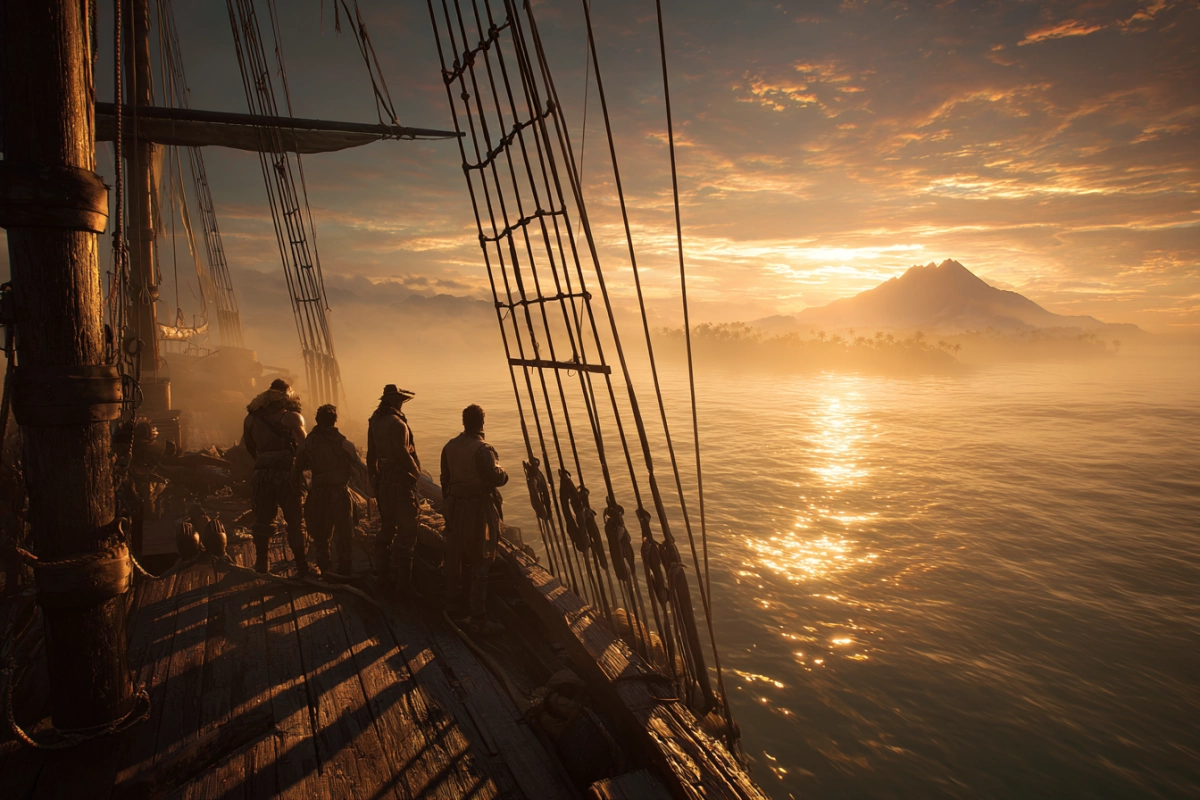
By the end of the century, Columbus’s 1492 voyage had opened a sustained Atlantic connection between Europe and the Americas. Machu Picchu therefore belongs not to an isolated “lost civilization,” but to a wider 15th-century world of powerful states, sophisticated engineering, expanding networks, and rapid political change.
The Yale Collections and Their Return to Peru
Bingham returned to Machu Picchu with larger expeditions sponsored by Yale University and the National Geographic Society. Archaeologists cleared vegetation, excavated burials and structures, photographed the ruins, and removed thousands of archaeological objects and fragments for study.
The status of those collections later became a long-running dispute between Peru and Yale. In 2010, the two sides reached an agreement that led to the return of materials to Peru.
The collection is now connected with research and exhibition in Cusco through cooperation involving the Universidad Nacional de San Antonio Abad del Cusco. The dispute became part of a much broader international discussion about archaeological ownership, excavation practices, and the return of cultural heritage.
UNESCO World Heritage Status and Conservation
Peru established the Historic Sanctuary of Machu Picchu in 1981, protecting not only the archaeological complex but also the surrounding mountain and cloud-forest environment. UNESCO added the sanctuary to the World Heritage List in 1983.
Machu Picchu is unusual because UNESCO recognizes it for both cultural and natural significance. The sanctuary protects Inca architecture, archaeological sites, roads, agricultural terraces, mountain ecosystems, forests, and species including the spectacled bear.
Preservation is complicated by intense rainfall, steep unstable slopes, biological growth, erosion, earthquakes, and the enormous popularity of the site. Managing visitors has therefore become part of conservation rather than a separate tourism issue.
Visiting Machu Picchu in 2026
Peru currently organizes access through three main visitor circuits containing ten routes. Routes emphasize different parts of the archaeological complex, including panoramic viewpoints, the classic urban area, royal-sector routes, and seasonal options.
- Regular capacity: Up to approximately 4,500 visitors per day.
- High-season capacity: Up to approximately 5,600 visitors per day on specified 2026 dates.
- Timed entry: Tickets are assigned to specific entrance periods and routes.
- Separate routes: Access to places such as Waynapicchu, Machupicchu Mountain, Intipunku, or the Great Cavern depends on the ticket and season.
- Conservation goal: Dividing visitor flows helps reduce congestion and physical wear on particularly sensitive areas.
Conclusion: The Lost City That Was Never Truly Lost
Machu Picchu remains extraordinary even after many of its mysteries are stripped away. It does not need to have been a secret fortress, a vanished civilization, or a supernatural observatory to be remarkable.
It was a meticulously planned Inca estate shaped by imperial power, sacred geography, engineering, agriculture, and human labor. Its builders stabilized an unstable ridge, controlled spring water, created hundreds of terraces and structures, and fitted elite masonry into a landscape they regarded as spiritually meaningful.
The site’s later history is equally revealing. It was abandoned as the Inca political order collapsed, yet local knowledge persisted. Hiram Bingham did not discover an unknown city in 1911; he helped transform a locally known archaeological landscape into an international historical monument.
Even its name may preserve a historical misunderstanding. Research suggesting that the Inca settlement was originally called Picchu or Huayna Picchu reminds us that archaeology is never completely finished.
That is the real story behind the Lost City of the Incas — not a city frozen outside history, but a place whose meaning has continued to change for nearly six centuries.
Machu Picchu — Frequently Asked Questions
Why is Machu Picchu called the Lost City of the Incas?
The nickname developed from early exploration stories and Hiram Bingham’s search for the lost Inca capital of Vilcabamba. Machu Picchu was largely unknown internationally, but it was never completely lost because local Andean residents knew the ruins existed.
Who built Machu Picchu?
Machu Picchu was built by the Inca state and is most strongly associated with Emperor Pachacuti Inca Yupanqui. Construction involved skilled stonemasons, engineers, agricultural workers, retainers, and labor mobilized from different parts of the empire.
When was Machu Picchu built?
Machu Picchu was constructed during the 15th century. Radiocarbon analysis indicates that people were using the site by approximately the 1420s, somewhat earlier than dates traditionally inferred from colonial chronicles.
How old is Machu Picchu?
Machu Picchu is roughly six centuries old. Its earliest securely dated occupation belongs to the early 15th century.
Was Machu Picchu really a city?
Machu Picchu is often called an Inca city or citadel, and UNESCO describes an organized urban complex of roughly 200 structures. Most scholars, however, interpret it more specifically as a royal estate containing elite residences, ceremonial areas, workers’ housing, agricultural terraces, and infrastructure rather than a large capital city.
Why was Machu Picchu abandoned?
The precise reason is unknown. Occupation declined during the period when epidemics, Inca civil war, Spanish conquest, and the destruction of imperial institutions disrupted the labor and supply systems that supported royal estates. Machu Picchu appears to have lost its function as the empire around it collapsed.
When was Machu Picchu abandoned?
Radiocarbon evidence suggests regular occupation continued until approximately 1530, around the beginning of the crisis that culminated in the Spanish conquest of the Inca Empire.
Was Machu Picchu burned or destroyed by the Spanish?
There is no strong evidence that Spanish troops captured and deliberately destroyed Machu Picchu. The site appears to have been abandoned rather than conquered in a documented siege, which helped preserve much of its Inca architecture.
When was Machu Picchu discovered?
Hiram Bingham reached Machu Picchu on 24 July 1911 and later brought it worldwide attention. He was not the first person to know or visit the ruins: local residents knew the site, and Agustín Lizárraga left evidence of a visit in 1902.
What did Machu Picchu look like when the Incas lived there?
The buildings were roofed with wood and thatch, terraces were maintained and cultivated, fountains carried fresh spring water, and the complex was occupied by workers, retainers, craftspeople, religious personnel, and visiting members of the Inca elite. It would have looked far more colorful and active than today’s roofless ruins.
Was Machu Picchu originally called Huayna Picchu?
Possibly. Research by Donato Amado Gonzales and Brian S. Bauer argues that historical evidence points to Picchu or more likely Huayna Picchu as the original name of the Inca settlement. The modern name Machu Picchu became firmly established after Hiram Bingham’s expeditions and publications.
Why is Machu Picchu important?
Machu Picchu preserves an exceptional example of Inca architecture, engineering, royal organization, agriculture, water management, and sacred landscape design. Because Spanish colonial development did not extensively rebuild the site, much of its original Inca plan survived.
Sources & References
- UNESCO World Heritage Centre, Historic Sanctuary of Machu Picchu.
- Richard L. Burger et al., AMS radiocarbon research on Machu Picchu chronology, Antiquity (2021).
- Donato Amado Gonzales and Brian S. Bauer, The Ancient Inca Town Named Huayna Picchu, Ñawpa Pacha: Journal of Andean Archaeology.
- University of Illinois Chicago, research summary on the historical naming of Machu Picchu.
- Archivo General de la Nación del Perú, reporting on colonial documents from 1544–1545 referring to Picchu.
- Sarahh Scher, Machu Picchu, Smarthistory, on the royal-estate interpretation, architecture, population, and landscape.
- Ken Wright and PBS NOVA, research on Machu Picchu’s water supply, fountains, drainage, terraces, and hydraulic engineering.
- Hiram Bingham, Lost City of the Incas, and the 1913 National Geographic account of the Yale Peruvian Expedition.
- Peruvian Ministry of Culture, official Machupicchu visitor circuits, routes, and 2026 carrying capacity regulations.
- National Geographic, historical and archaeological reporting on Bingham, Vilcabamba, Espíritu Pampa, and Machu Picchu.
More Articles